Bespoke Wardrobe Lighting: LED Integration, Color Temperature, and Sensor Placement
Why Lighting Defines a Walk-In Closet More Than Any Other Single Element
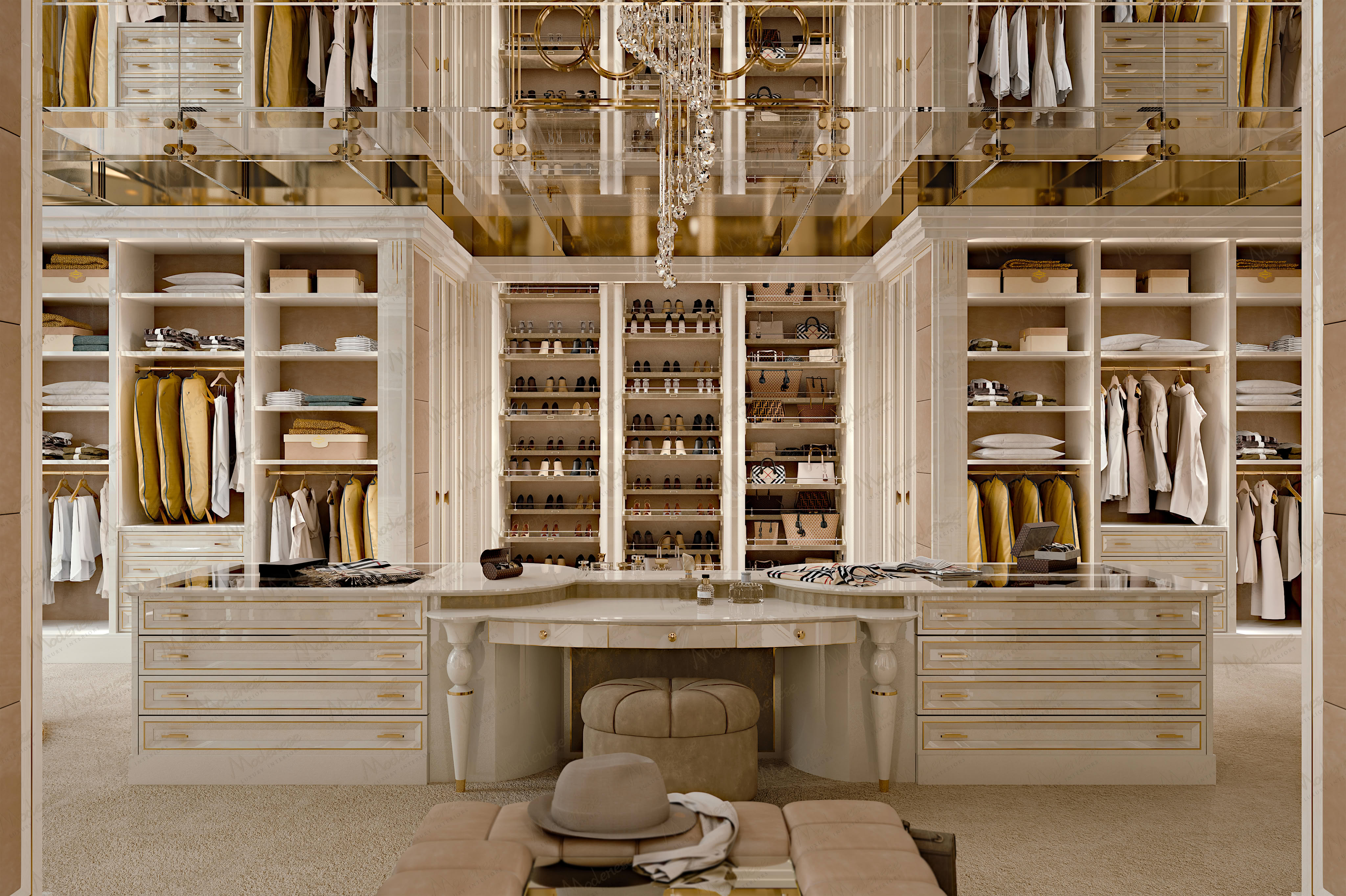
A walk-in closet built from the finest walnut, fitted with brushed brass hardware, and stocked with hand-stitched leather goods will look flat and uninviting under bad lighting. The reverse is also true: a well-lit closet makes mid-range materials look considered and intentional. Lighting is the single design variable that affects both function and perception in a luxury walk-in closet more than any other, yet it receives less engineering attention than drawer slides or shelf spacing during most design phases.
This article covers the technical specifics of LED integration in high-end wardrobe interiors — strip selection, color temperature trade-offs, sensor logic, dimming infrastructure, and thermal management inside enclosed cabinetry.
LED Strip Selection: Density, Output, and CRI
The standard LED strip used in residential cabinetry runs 60 LEDs per meter with a total output around 800 lumens per meter. For a walk-in closet, this is inadequate in most applications. Shelf-edge lighting needs at minimum 1200 lm/m to illuminate folded garments without shadow pooling at the rear of 600mm-deep shelves. Hanging rod lighting — where strips mount inside an aluminum channel above the rod — requires 900-1000 lm/m because the clothes themselves absorb a significant portion of the downward light.
CRI (Color Rendering Index) is the specification that separates a wardrobe lighting scheme from a retail display. A CRI of 80, standard in most commercial LED strips, distorts reds and deep blues. For a closet where the owner needs to distinguish between a navy and a black suit, or between burgundy and oxblood leather goods, a CRI of 95 or above is non-negotiable. Strips rated CRI 97 are available from manufacturers like Nichia and Seoul Semiconductor, at roughly 2.5x the cost of CRI 80 equivalents.
Color Temperature: The 2700K vs 4000K Decision
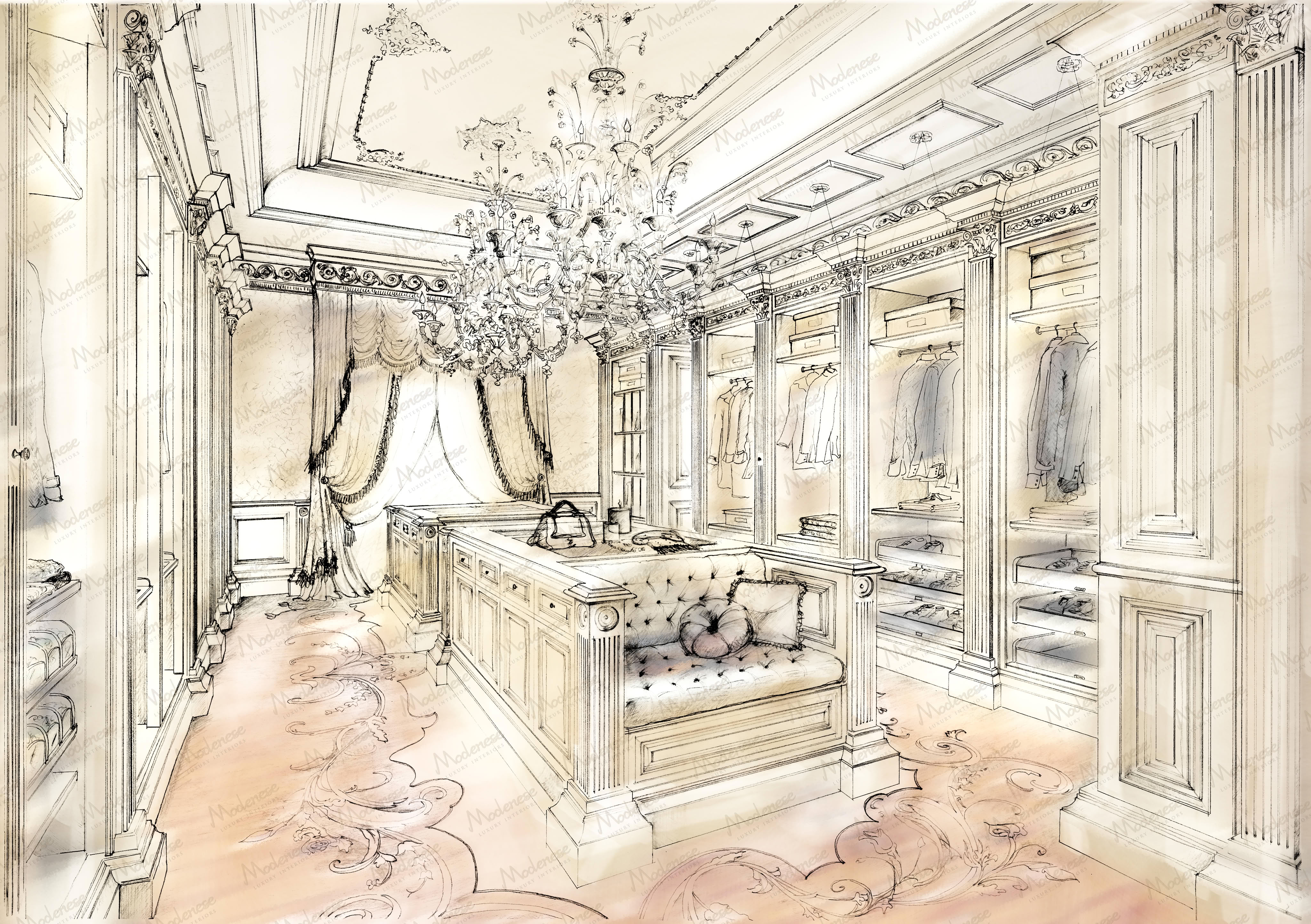
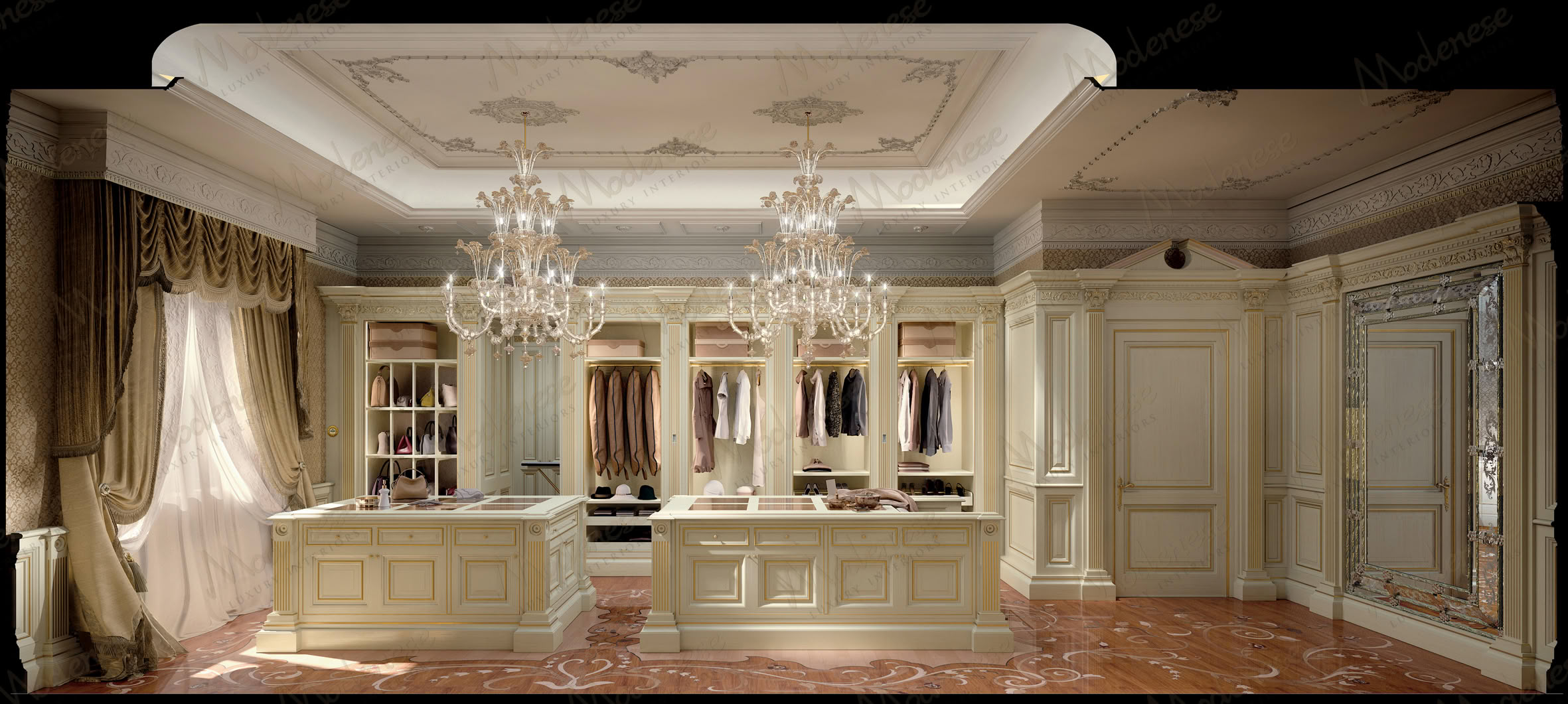
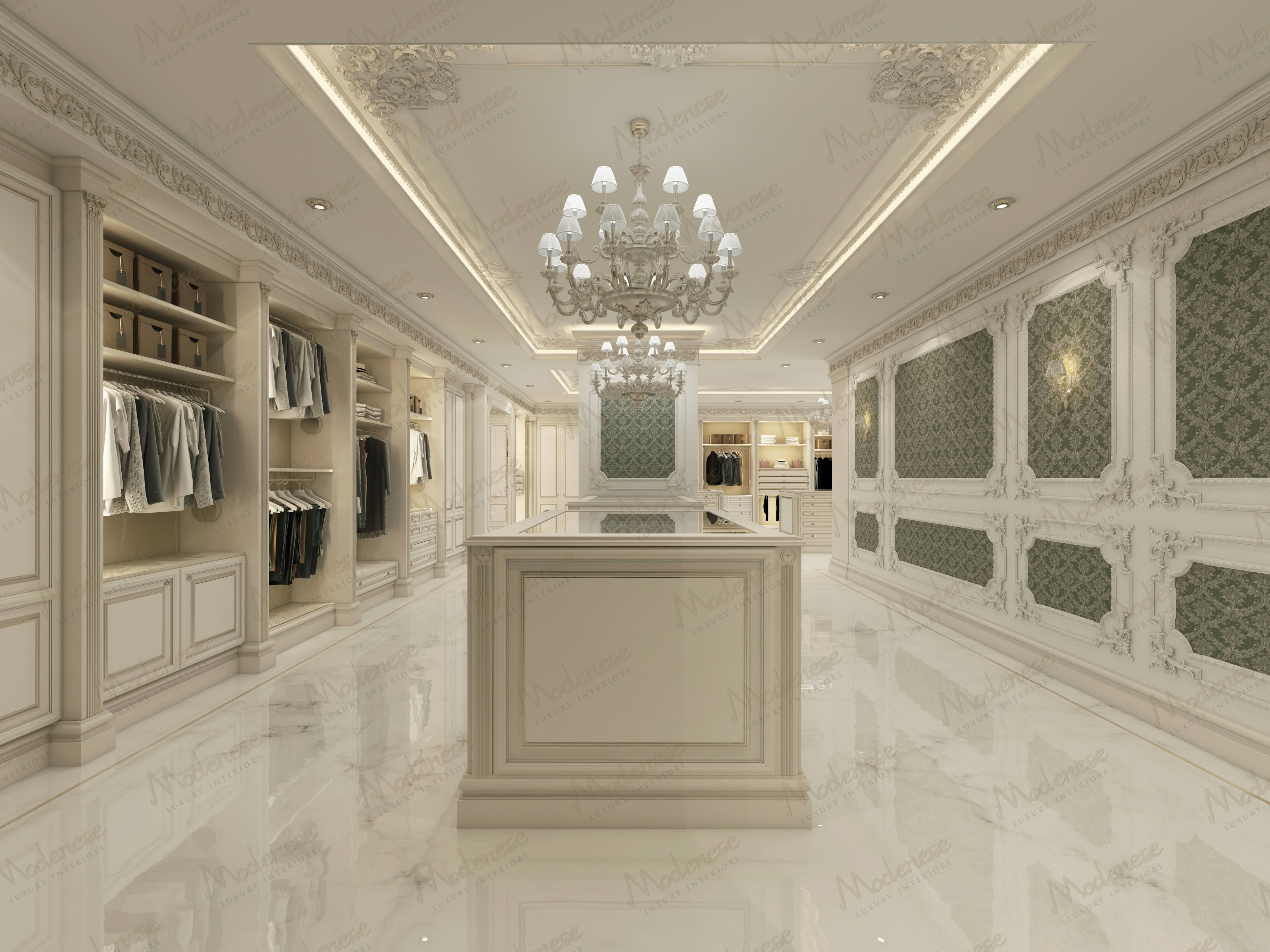
This decision depends on the closet’s material palette. A neoclassic wood closet finished in warm walnut or cherry reads best under 2700K, which enhances the amber tones in the grain without washing out the wood’s natural variation. A contemporary closet with lacquered white or grey surfaces benefits from 3500K-4000K, which keeps neutral surfaces looking crisp rather than yellowish.
The practical solution for closets where both warm wood and neutral garments coexist: tunable white LED strips. These run two separate LED channels (typically 2700K and 6500K) on independent drivers, allowing the color temperature to shift depending on the zone or time of day. The shoe display section might run at 3500K for accurate color matching, while the island counter runs at 2700K to match the surrounding wood paneling. The cost premium over single-CCT strips is approximately 40%, but the flexibility eliminates the compromise entirely.
Placement Zones: Where Light Goes and Why
Cove Lighting (Ceiling Perimeter)
Cove lighting washes the upper portion of floor-to-ceiling cabinetry and provides general ambient illumination. Mount the strip 80-100mm from the wall inside a recessed channel with a 60-degree beam angle. This prevents hot spots on the ceiling while directing enough light downward to make the room navigable without task lighting. A warm 2700K strip at 1500 lm/m works well here.
Shelf-Edge Strips
Mount strips at the front underside of each shelf, recessed 15mm from the front edge inside an aluminum profile with a frosted diffuser. The diffuser eliminates the visible dot pattern that raw LED strips produce. Without it, every folded sweater gets a row of bright spots across its surface. On 600mm-deep shelves, angle the strip 10 degrees toward the rear using an angled aluminum channel to push light to the back wall of the shelf.
Hanging Rod Illumination
The most effective position is directly above the hanging rod, centered in the compartment. An LED-integrated hanging rod — where the strip mounts inside a purpose-built aluminum rail that also serves as the rod — eliminates the need for a separate channel above. These are available in diameters of 25mm and 33mm. The 33mm version accommodates a wider strip with better heat dissipation.
Drawer Interior Lighting
Short strips (200-300mm) mounted at the inside front face of the drawer, triggered by a reed switch or micro limit switch that activates when the drawer opens. Power reaches the strip through a flexible flat cable that routes through a slot in the drawer back panel, connecting to a fixed power rail inside the carcase. This eliminates visible wiring while allowing the drawer to operate without restriction.
Sensor Logic and Switching
PIR (Passive Infrared) sensors work best for room-entry activation. Mount one sensor at the closet entrance, 2100mm from floor level, aimed to cover the entry path. Set the hold time to 15 minutes — shorter durations cause the lights to cut out while the owner is standing still choosing an outfit.
For zone-specific activation, capacitive proximity sensors embedded behind the cabinet face panel detect the presence of a hand within 50-80mm. This allows individual sections to illuminate as the owner approaches them, which both saves energy and creates a responsive, intentional lighting sequence. The sensors draw under 0.5W each in standby.
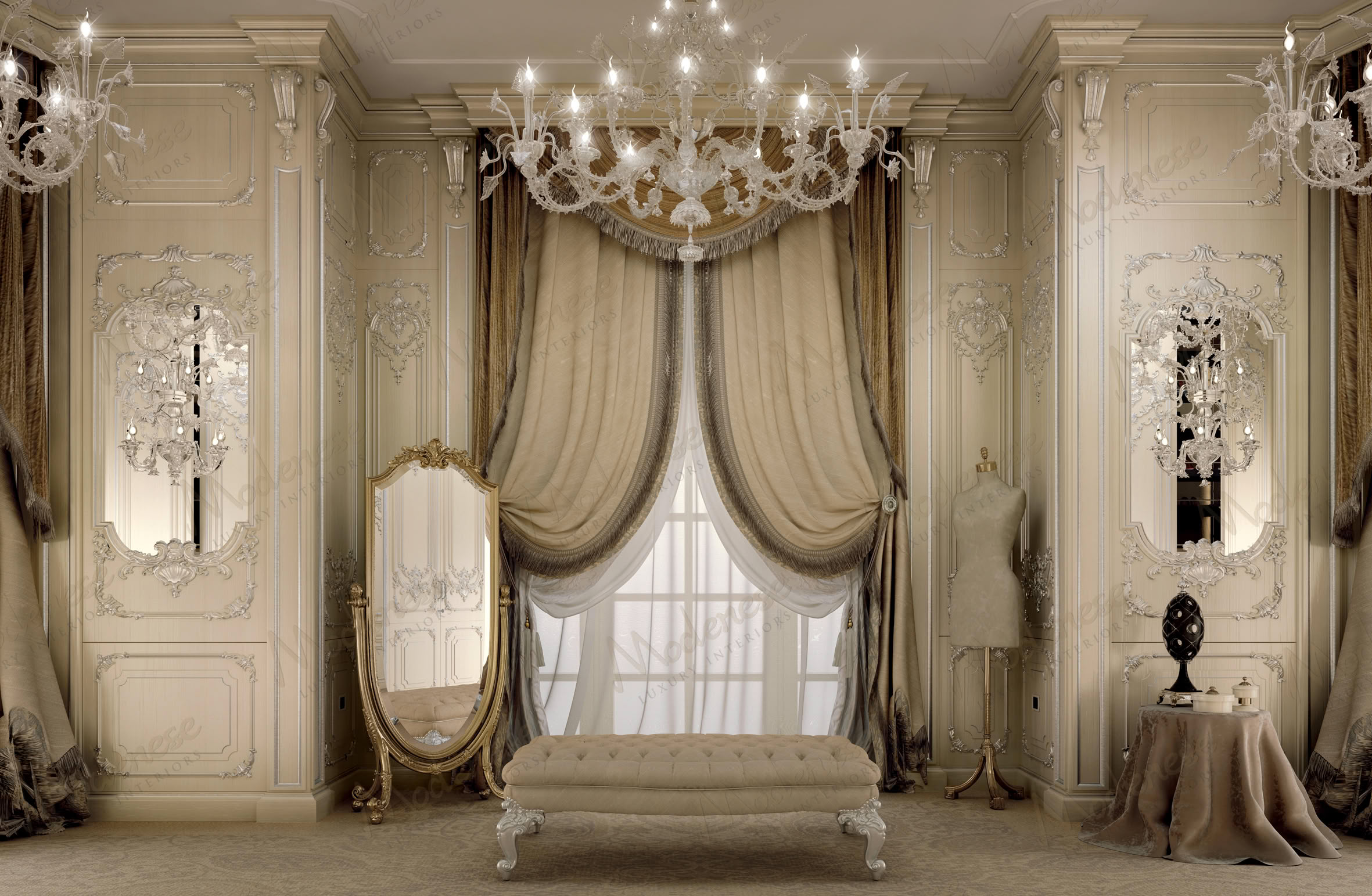
Door-activated micro switches remain the most reliable trigger for enclosed compartments. A baroque silver closet with hinged display doors should use magnetic reed switches rather than mechanical lever switches — reed switches have no moving parts exposed to the interior, last longer, and produce no audible click.
Dimming Infrastructure
Three protocols dominate closet dimming installations:
0-10V is the simplest. A low-voltage signal wire runs alongside the power cable to each driver, and a wall-mounted rotary or slider dimmer controls output from 0-100%. The limitation: all strips on one circuit dim together. Adequate for a single-zone closet. Wiring is two-conductor signal plus two-conductor power.
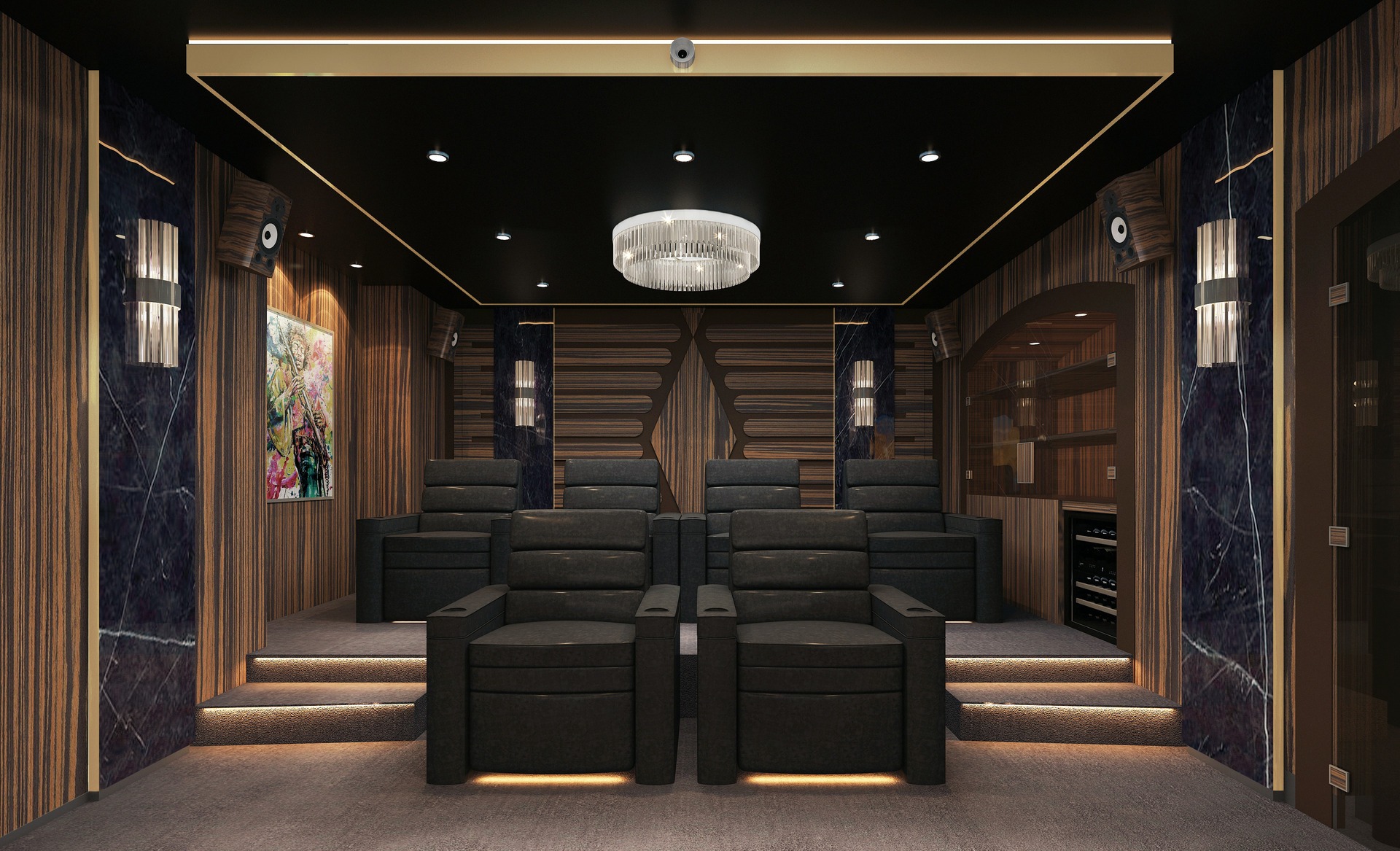
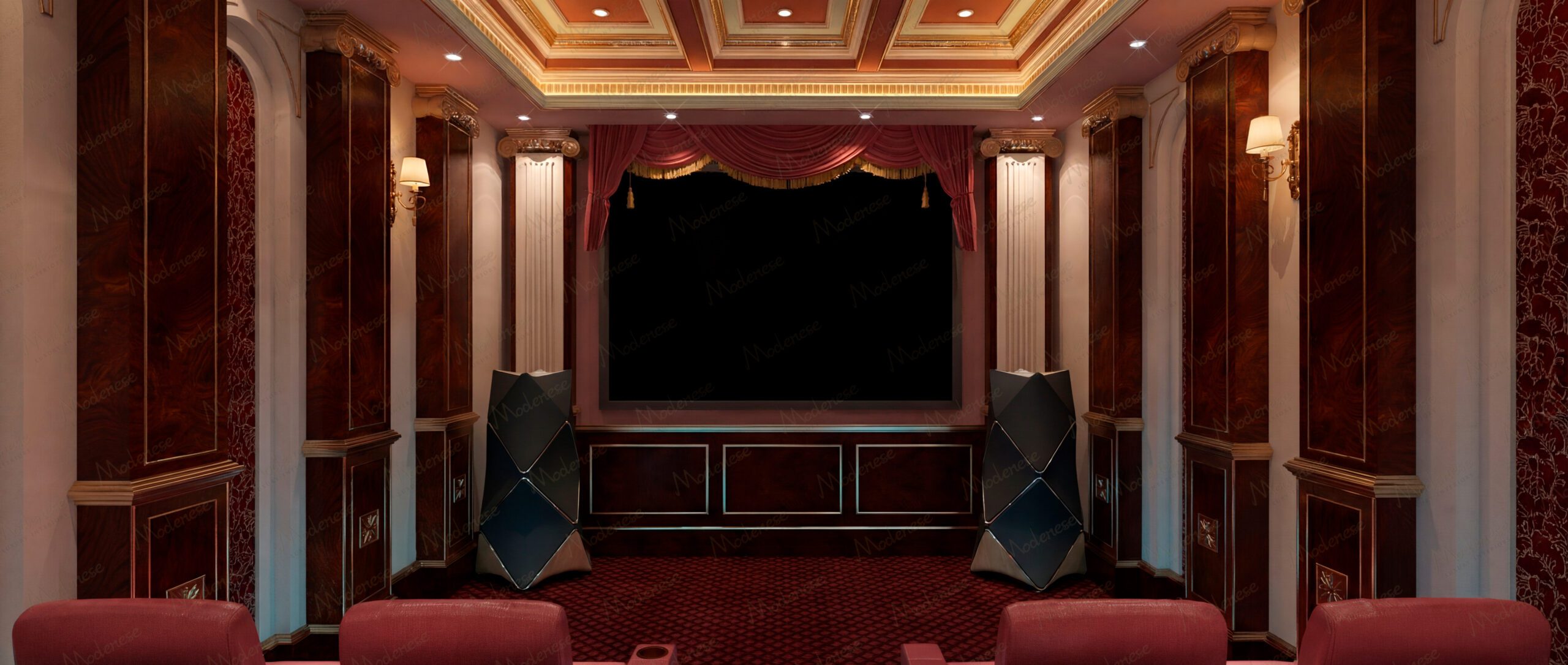
DALI (Digital Addressable Lighting Interface) allows individual addressing of up to 64 drivers on a single two-wire bus. Each LED zone gets its own address and can be programmed to specific levels independently. DALI drivers cost approximately 35% more than 0-10V equivalents, but the per-zone control pays for itself in closets with more than four distinct lighting zones. The same infrastructure used in home cinema lighting — where DALI manages pre-show and intermission scenes — applies directly here.
Casambi (Bluetooth mesh) eliminates the signal wire entirely. Each driver contains a Bluetooth radio and joins a mesh network controlled from a phone app or a dedicated wall switch. Ideal for retrofit installations in existing traditional classic closets where running additional signal wiring through finished cabinetry is impractical. Latency is approximately 100ms — imperceptible for closet applications.
Thermal Management in Enclosed Cabinetry
LEDs generate less heat than halogen predecessors, but in sealed cabinets that heat still accumulates. A 5-meter run of high-output strips (1500 lm/m) dissipates roughly 70W of heat. Inside a closed compartment with no ventilation, ambient temperature rises enough to reduce LED lifespan from the rated 50,000 hours to as few as 25,000.
The solution is aluminum extrusion profiles, which serve as both mounting channel and heat sink. A profile with a cross-section of at least 15mm x 7mm dissipates heat from a 14W/m strip effectively. For higher-output strips, use profiles with integrated fins or a wider base (25mm x 12mm). Ensure the profile makes continuous contact with a solid surface — mounting it to the underside of a 19mm MDF shelf via thermal adhesive tape transfers heat into the shelf mass, which acts as an additional heat sink.
In deluxe modern closets with glass-fronted display sections, allow a 6mm ventilation gap at the top and bottom of each enclosed section. This creates a passive convection path that moves warm air out and cool air in without visible openings from the front.
The same material considerations that apply to LED thermal management connect directly to broader material selection for long-lasting walk-in closets, where heat exposure affects finish durability and hardware lifespan. And the wiring infrastructure for closet lighting integrates naturally with the electrical planning covered in modular vs fixed wardrobe construction, where cable routing differs significantly between the two approaches.
For projects where the walk-in closet is part of a larger residential build that includes a handmade Italian kitchen, coordinating the lighting control protocol across both spaces — using a single DALI bus or Casambi network — reduces installation complexity and gives the homeowner unified control from one interface.