
Material Choices for Long-Term Serviceability
Plan a luxury walk-in closet around its real loads, frequency of use, humidity, cleaning and ease of repair. Lifespan comes from the whole system, not from any one material. Ask for documented panel grades, hardware load ratings, finish samples, replaceable components and care instructions for the closet system.
For the broader planning context, see our luxury walk-in closet design overview.
This guide compares panel substrates, wood movement, drawer and hinge selection, interior linings, glass options and hardware finishes. Manufacturer data changes, so current technical sheets and calculations for your closet outrank these examples.
Panel Substrates: Solid Wood vs Veneered MDF vs Lacquered Board
Solid wood, veneered panel products and coated boards respond differently to moisture, impact and refinishing. Select species, construction, thickness and finish from documented product properties, expected loads and the service environment. Calculate movement and support details for the actual panel geometry.
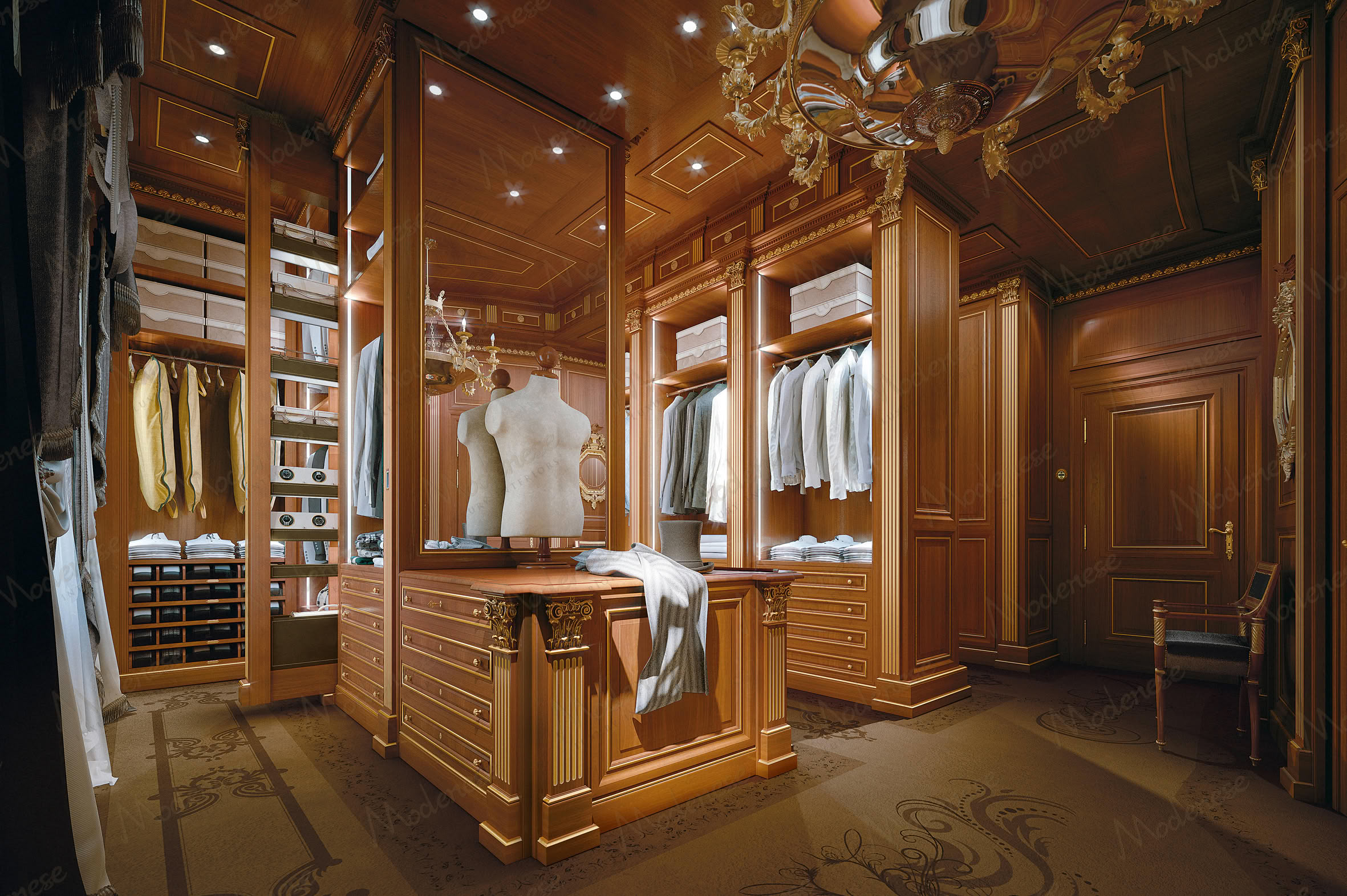
Veneered wood-based panels can provide a stable substrate, though panel grade, veneer, adhesive, edge treatment, supports and humidity all affect how they perform. Obtain the declarations and a sample of the exact product: veneered panels still move, and veneer thickness differs by product. For a finished design, see the neoclassic wood closet page.
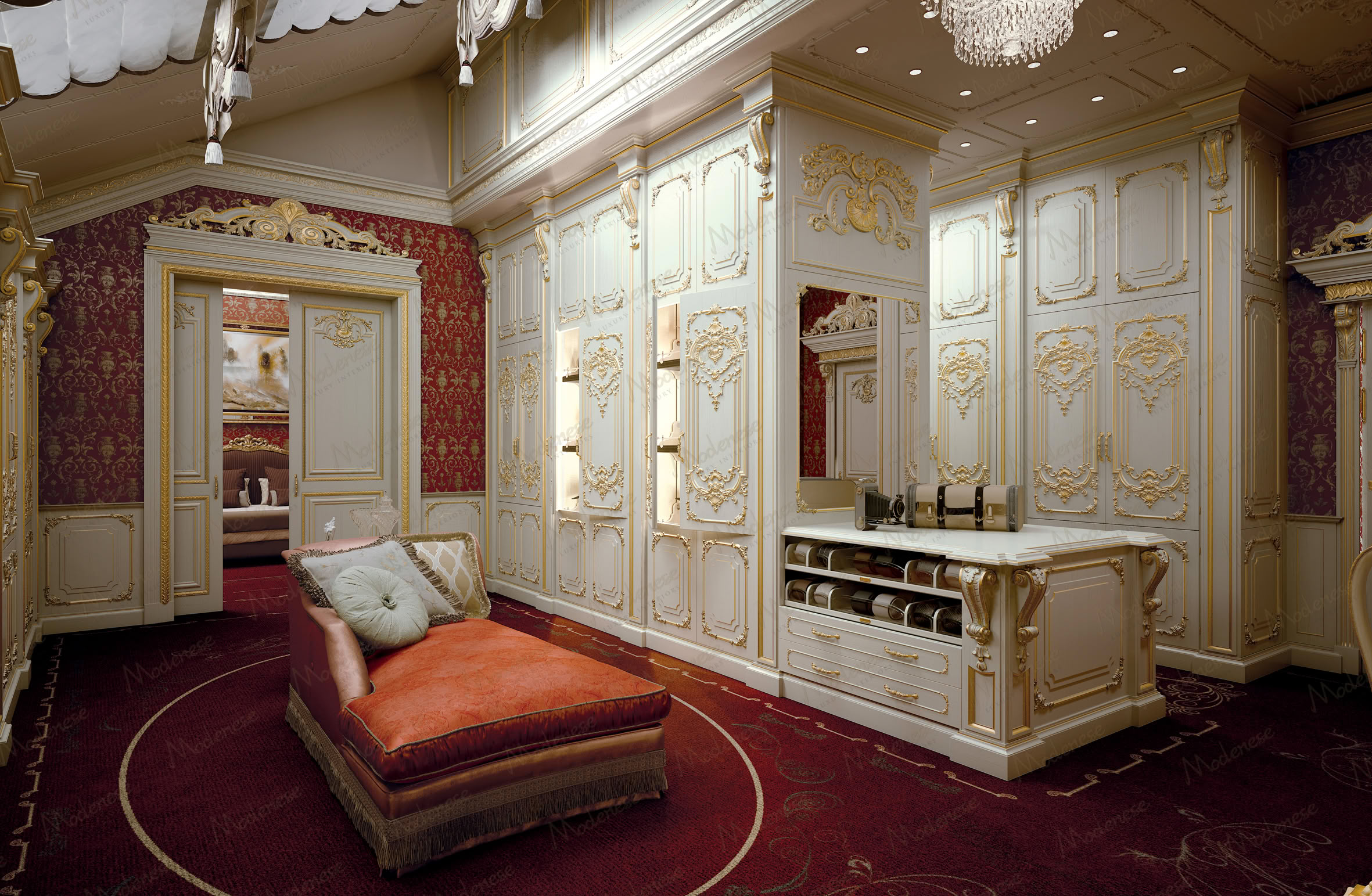
Coated panels give the uniform appearance seen in contemporary closet designs. Specify the complete coating system from technical data and sample approval, including substrate preparation, film build, edge treatment, cleanability, color stability and repair. The coating family alone says little about performance.
Wood Species for Specific Functions
Cedar and Camphor Linings
Cedar and camphor are sometimes chosen for their aroma or for traditional storage use. An unfinished wood lining counts as pest control only when the specific product comes with efficacy evidence. For pest prevention and treatment, follow current conservation or pest-management advice, and take the care and resurfacing intervals from the supplier instructions.
Structural Species
Select the species and panel thickness using graded material properties and a shelf-deflection calculation for the specific closet. The calculation must cover span, supports, load duration, moisture and safety factors. Hardness figures alone cannot determine shelf suitability. Samples placed under the expected exposure help assess light-driven color change. Completed walk-in closet projects show how material and support choices work within full closet designs.
Drawer Slide Mechanisms
For drawer slides, compare the manufacturer-rated load at your drawer width. Also compare extension, cycle-test method, adjustment range, soft-close behavior, corrosion class, spare-part availability and compatibility with inserts. A rating applies only to the product variant and test setup it was measured on. In traditional designs, the runner can often be concealed behind a separate wooden drawer box or front.
Organizer compatibility and future replacement matter as much as the mechanism you install first. Record exact part numbers in the project schedule, and confirm that runners can be reached without dismantling fixed cabinetry.
Interior Linings: What Touches the Garments
Match insert linings to the objects, their finishes and your cleaning routine. Review abrasion, cushioning, compression recovery, dye or chemical transfer and adhesive data for the assembly you specify.
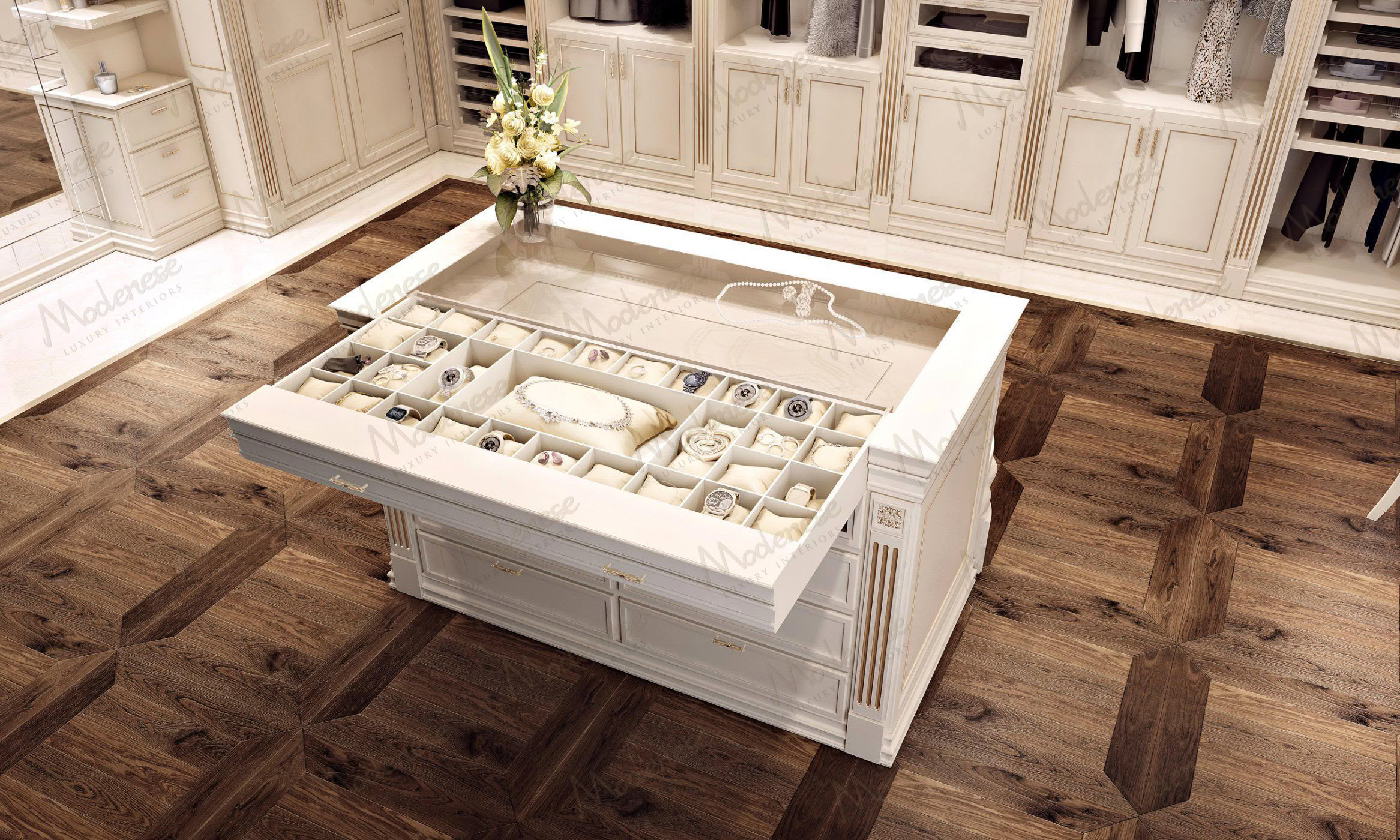
Full-grain leather cushions objects and develops a patina. Check for dye transfer, acidity, adhesives, foam and cleaning requirements where jewelry and textiles will rest on it. It can complement classical closet designs.
Microfiber suede offers a uniform surface and broad color range. Request abrasion, colorfastness, chemical-emissions and cleaning data for the product itself; leather data does not carry over.
Flocked textile gives a soft surface, though fiber density, adhesive quality, compression recovery and cleanability differ between products. Review a physical sample with the objects it will hold.
Glass Shelves: Tempered vs Laminated
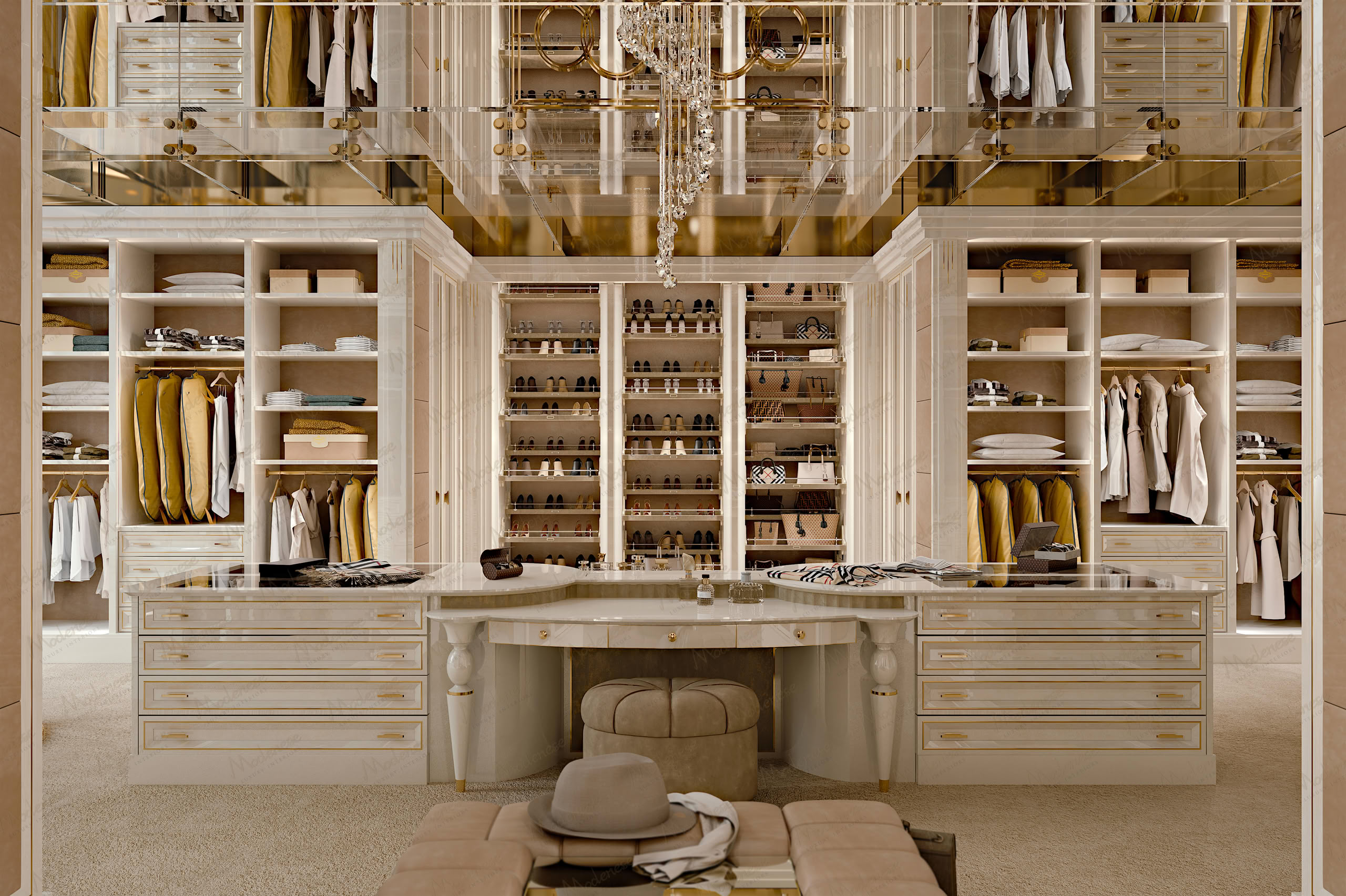
Engineer each glass shelf for its actual application and the applicable safety requirements, using fabricator data for type, thickness, dimensions, edge finish, supports and load rating. Tempered and laminated glass behave differently after breakage, and thickness and load capacity are set for each shelf. For laminated glass, specify the full tested build-up, and weigh retention requirements, mass and cost against the hazard and the installation.
Edge-lighting and back-lighting create different visual effects. Build a physical mock-up to verify compatibility with the selected glass, optics, thermal design and required task illumination. Use the guidance in our bespoke wardrobe lighting design article.
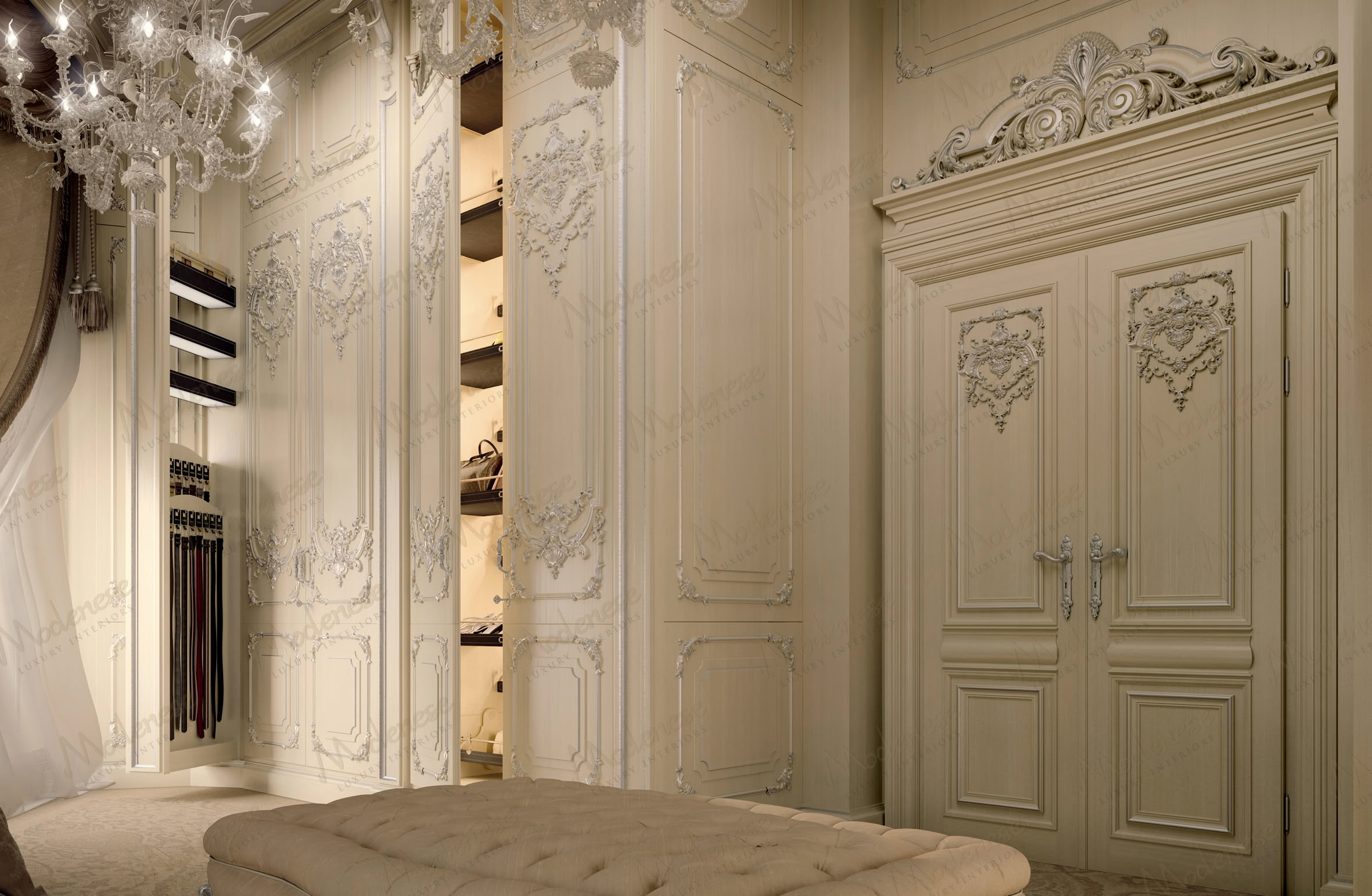
Hardware Finishes That Last
Handles, hooks, hanging rods and pull knobs are touched often in a closet. Choose their finish for the expected contact, cleaning and exposure conditions.
PVD coatings can offer good wear and corrosion resistance. The result depends on substrate preparation, coating chemistry and thickness, geometry and the manufacturer test method. Ask for the product-specific abrasion and corrosion results and the stated cleaning limitations.
Electroplated finishes also vary widely with substrate, layer stack, thickness, sealing and exposure. A salt-spray duration is not a service-life promise, and two results compare only when the test standard, rating criterion and specimens are equivalent.
Material choices interact with the structural and connection strategy described in our comparison of modular versus fixed wardrobe construction. Read the two together. Some substrate, wood-movement and finish-selection principles also apply to Italian kitchen cabinetry and solid wood kitchen construction, though each application sets its own requirements.
The materials, joinery techniques and technical decisions behind handmade interiors are the subject of our detailed guides on Italian kitchen engineering, walk-in closet construction and home cinema design.