
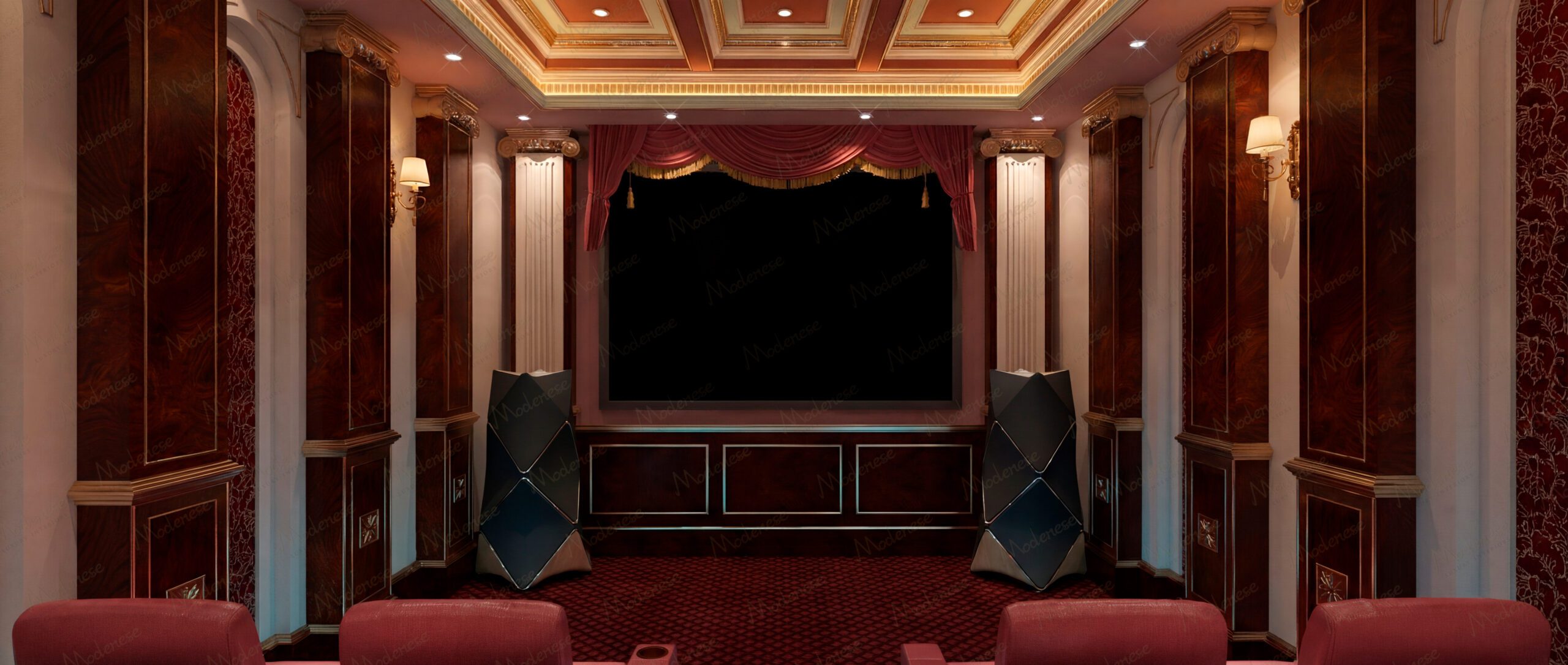
Integrating Acoustic Treatment Into the Room Design
Hard surfaces in a private home cinema create reflections that affect localization, timbre, clarity, and decay. Acoustic treatment, integrated into the room design, helps manage early reflections and reflection decay. It works alongside sound isolation, system design, and calibration, and replaces none of them.
This guide introduces absorbers, diffusers, and low-frequency treatments. Product selection, amount, and placement are designed for your room and system, then checked by measurement.
Fabric Absorbers: Material Selection by Frequency Response
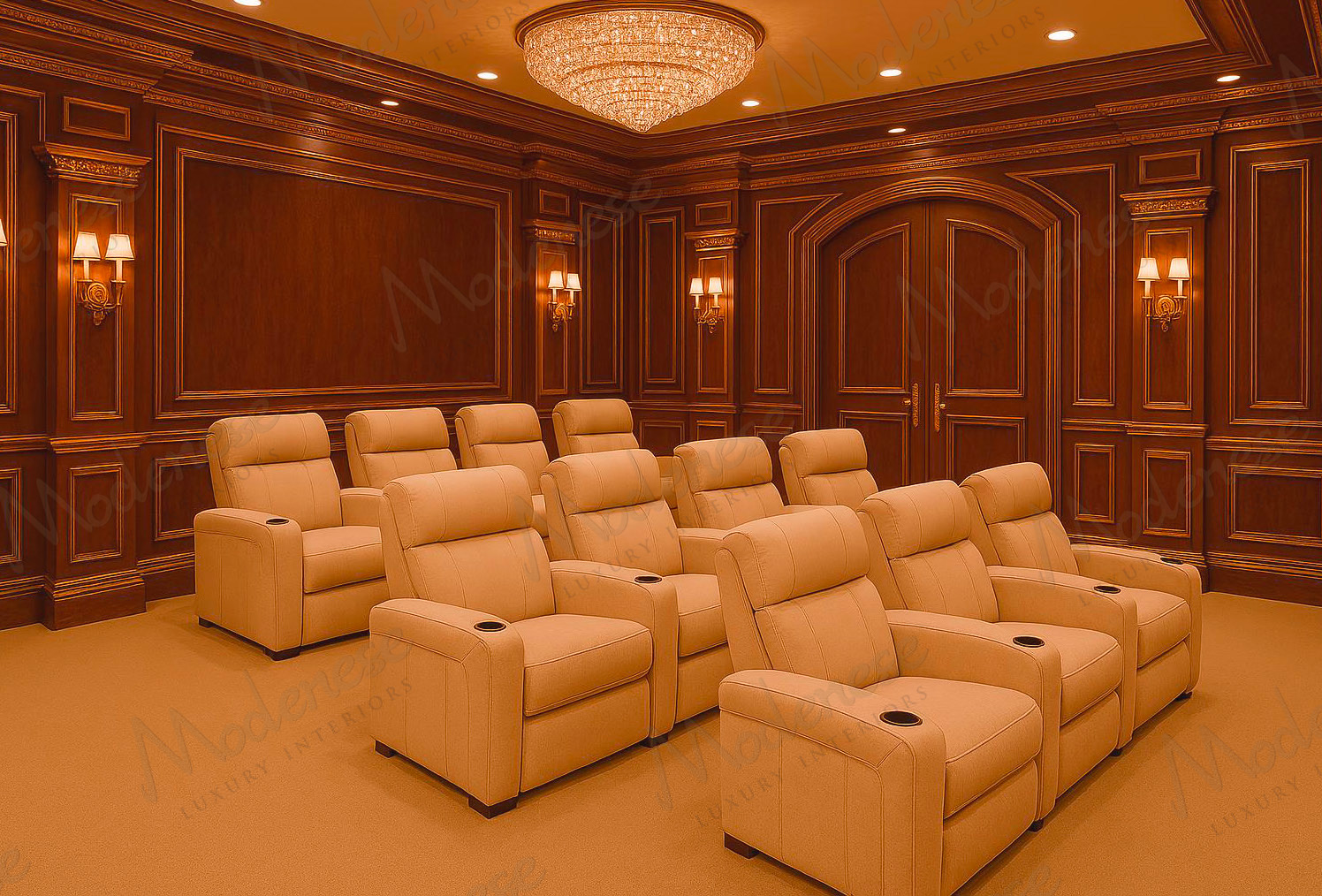
Fabric-covered absorbers are one way to manage reflections. Performance depends on the tested assembly, thickness, air cavity, placement, and fabric insertion loss, so the fabric is part of the acoustic design.
Core Materials
Absorption coefficients belong to one tested assembly and do not carry over to other mineral-wool products. Specify density and thickness from ISO 354 or ASTM C423 test data for that assembly, then model it and verify the result in the room.
PET and mineral-fiber products vary, so compare them product by product. Look at current absorption, fire, emissions, handling, and installation data for each before you choose.
Fabric Covering
Select fabric from measured insertion-loss or airflow data for that fabric and assembly. CEDIA/CTA-RP22 recommends third-party data or self-testing. Rely on those measurements, not on an airflow-resistance cutoff or a blanket verdict on a whole fabric family. A traditional classic theater can still use rich visual textures once the chosen assembly has measured data behind it.
Wood Slat Diffusers: Geometry That Scatters Sound Predictably
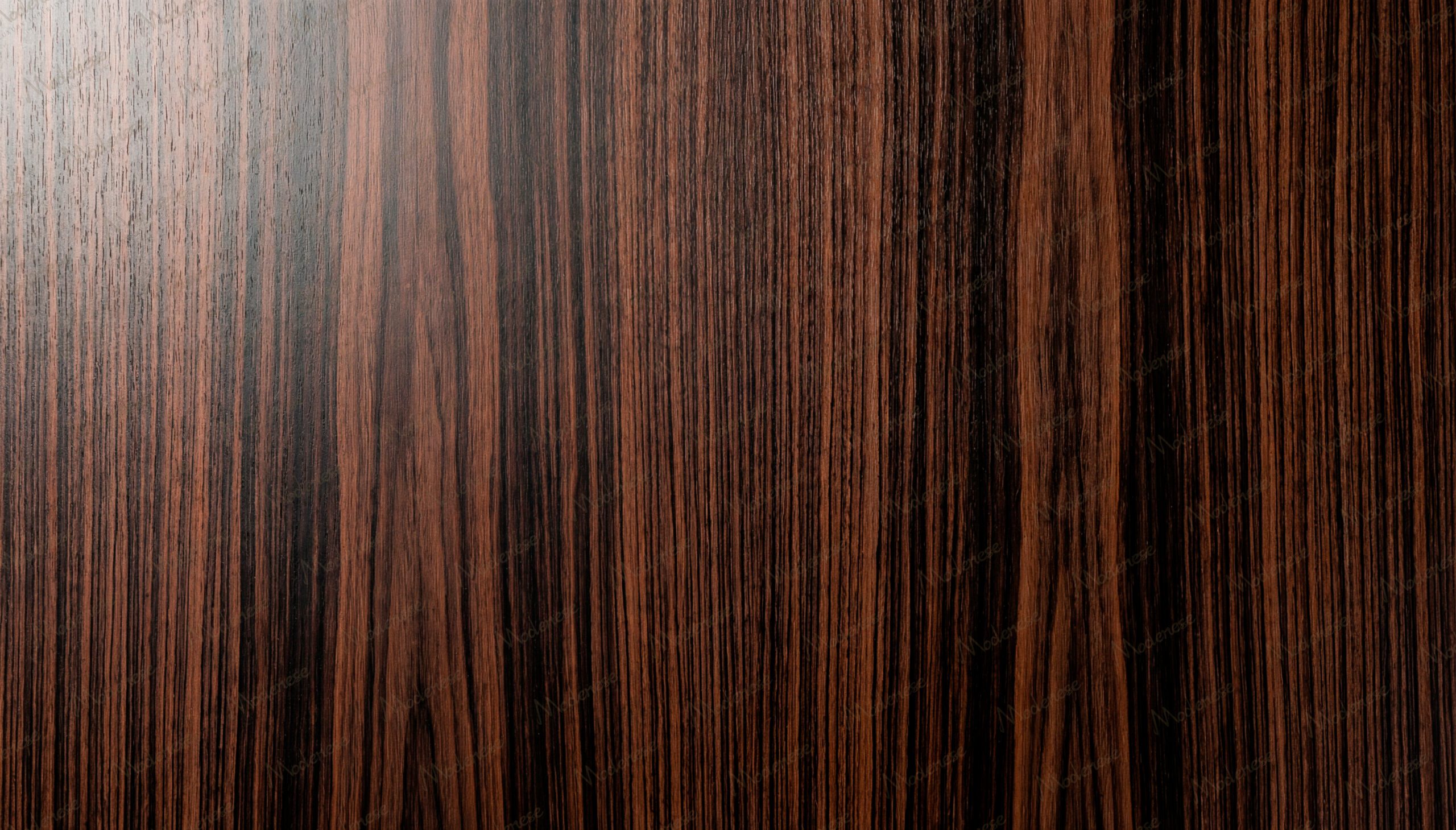
Diffusers redistribute reflected energy but do not eliminate it. Their effect, and the listener distance they require, depend on geometry and placement, so both should be modeled or measured.
Engineered Diffuser Geometry
A phase-grating diffuser works from calculated well geometry. Its operating range, well width and depth, minimum listener distance, and total projection are engineered for the selected design. See the Makassar modern cinema for a modern interior.
Material Selection for Slats
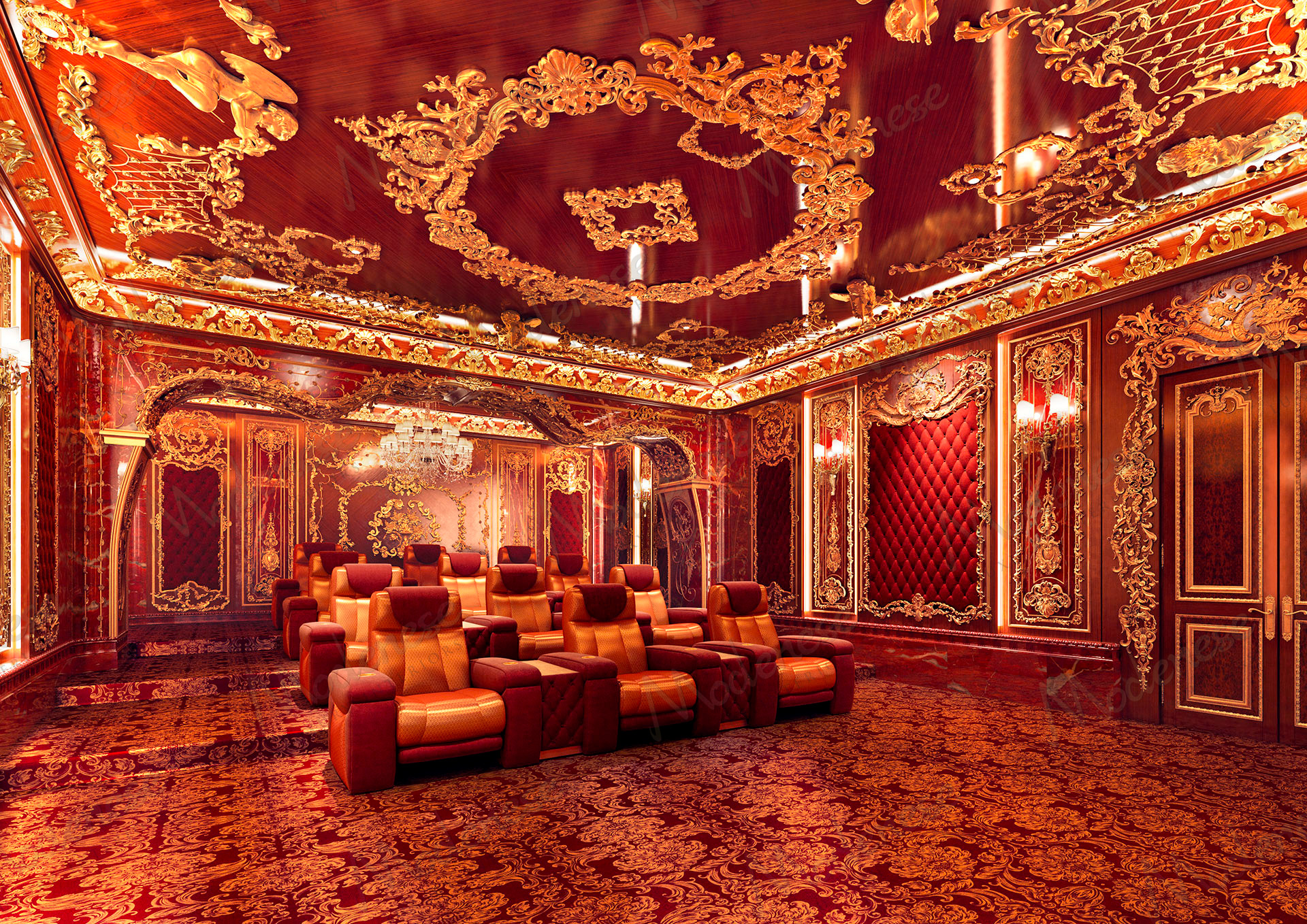
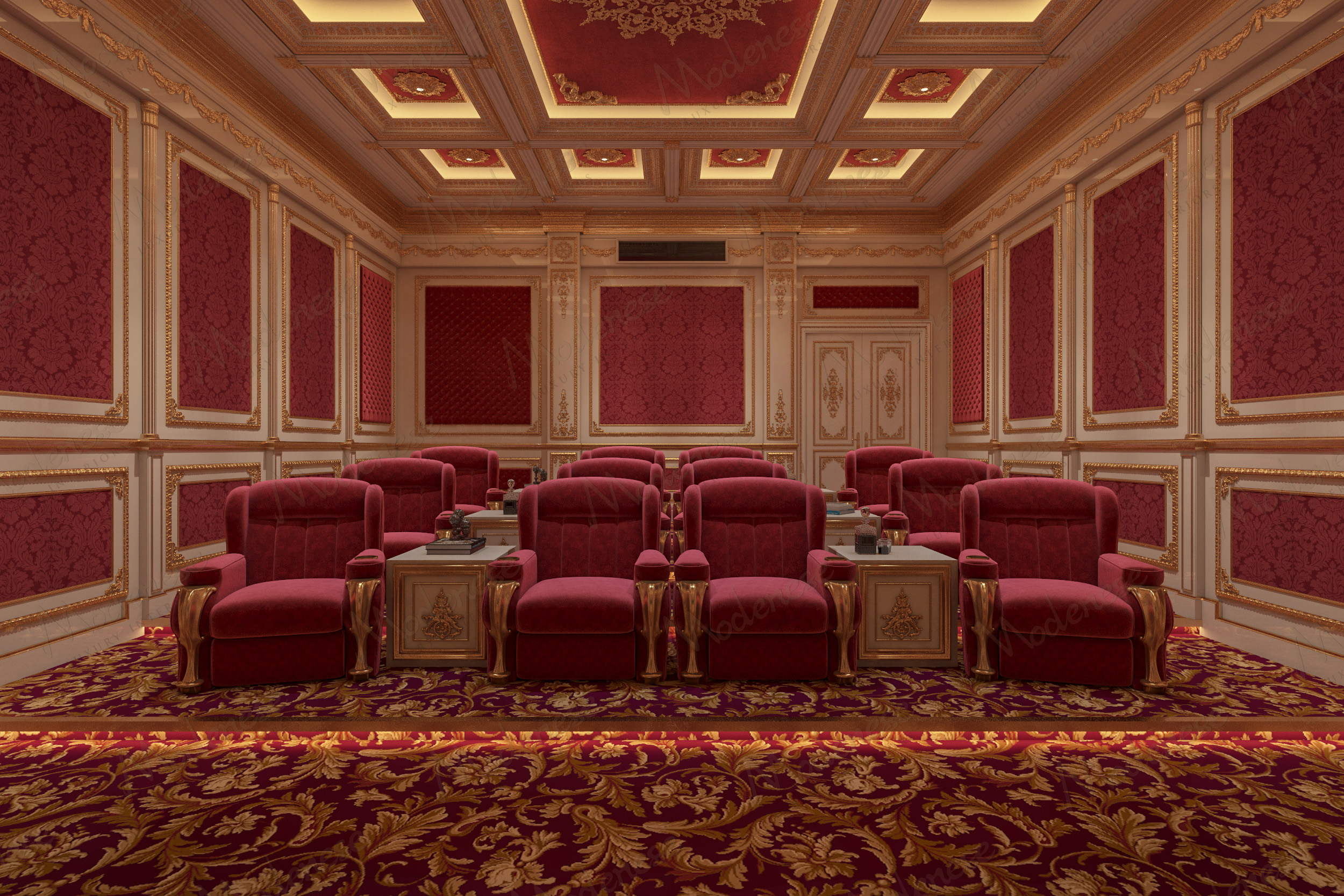
Slat material and thickness come from the acoustic model, the structural and fire requirements, fabrication tolerances, and product or test data. Every room gets its own specification. The classical baroque cinema shows a classical interior.
Bass Traps: Managing the Lowest Frequencies
Room modes and boundaries govern low-frequency behavior. Passive absorption, room construction, subwoofer placement, and calibration can be combined to manage it, because equalization alone may leave some seats with different results.
Specify porous or tuned low-frequency treatments from measured product data and a room model. Effective frequency range, thickness, and placement follow from that data and model, not from material thickness alone.
Tuned membrane absorbers need project-specific design, covering construction tolerances, damping, placement, and verification. Tuning frequency, bandwidth, depth, and corner count are set by that design, so a stock panel build cannot be reused.
Reflection Decay and Room Balance
RT60 describes a 60 dB decay in a diffuse field. CEDIA/CTA-RP22 notes that small residential rooms are better characterized by reflection decay time. It cites a longstanding guideline of 0.2 to 0.5 second, with the target depending on room volume. Set the target and the frequency curve for your room, then verify both against as-built measurements.
Begin by measuring or modeling the untreated room, then calculate treatment by frequency band. The amount and location depend on room volume, construction, speakers, listening area, and the chosen design strategy. CEDIA/CTA-RP22 supports a project-specific mixture of absorption, diffusion, and reflection, not one coverage percentage or surface hierarchy for every room.
Seating and acoustic design are planned together, as our seating layout guide explains. Automation can coordinate motorized room elements only when they are specified, documented, and commissioned. The smart automation guide covers that.
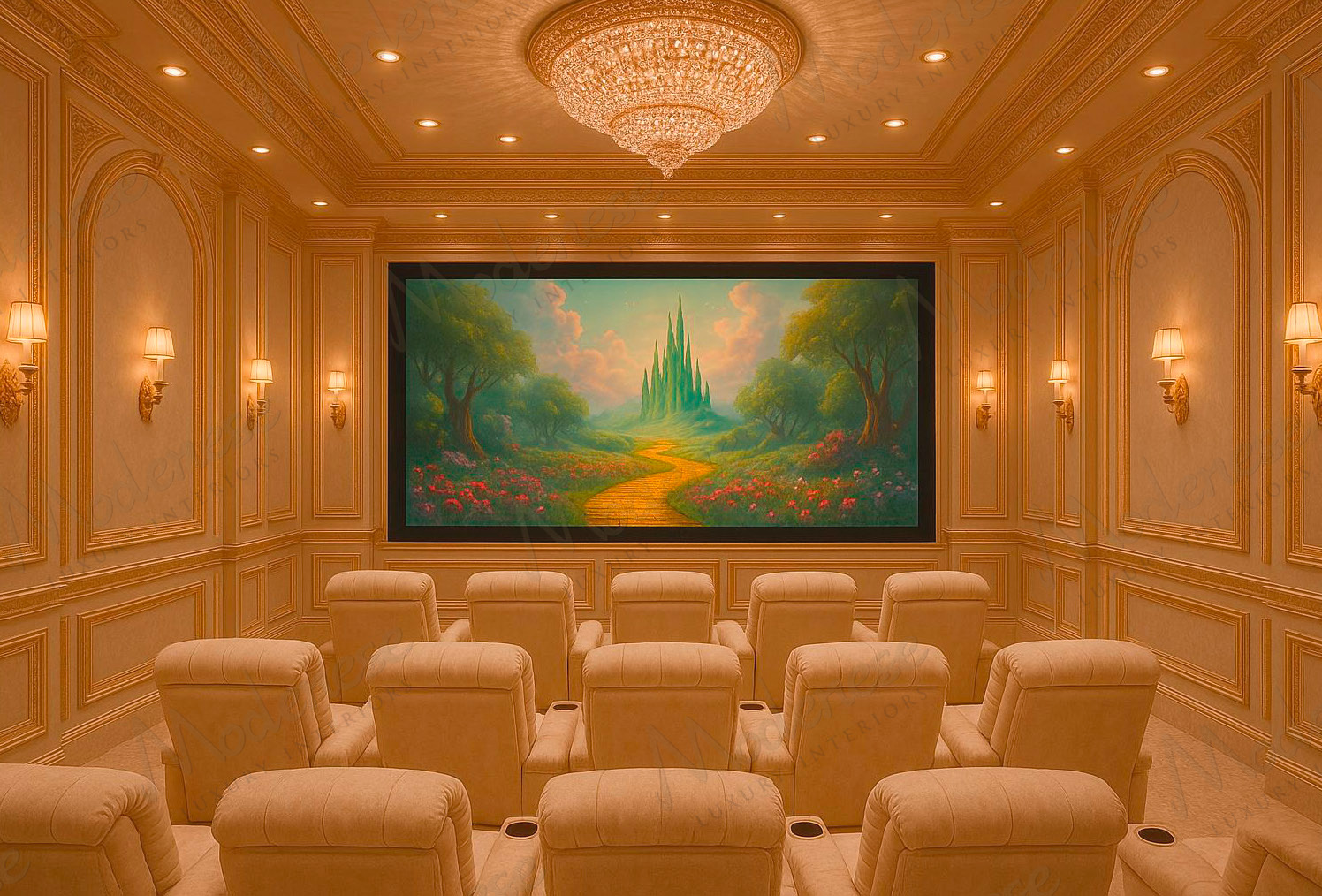
Precision carpentry applies to wood diffuser panels and moldings as well as to kitchen cabinetry and closet construction. Acoustic geometry and fire-performance requirements differ with each application. The solid wood construction guide gives related background. Final acoustic assemblies are modeled, tested, and documented for the room.
Our guides on Italian kitchen engineering, walk-in closet construction, and home cinema design cover the materials, joinery techniques, and technical decisions behind handmade interiors.