
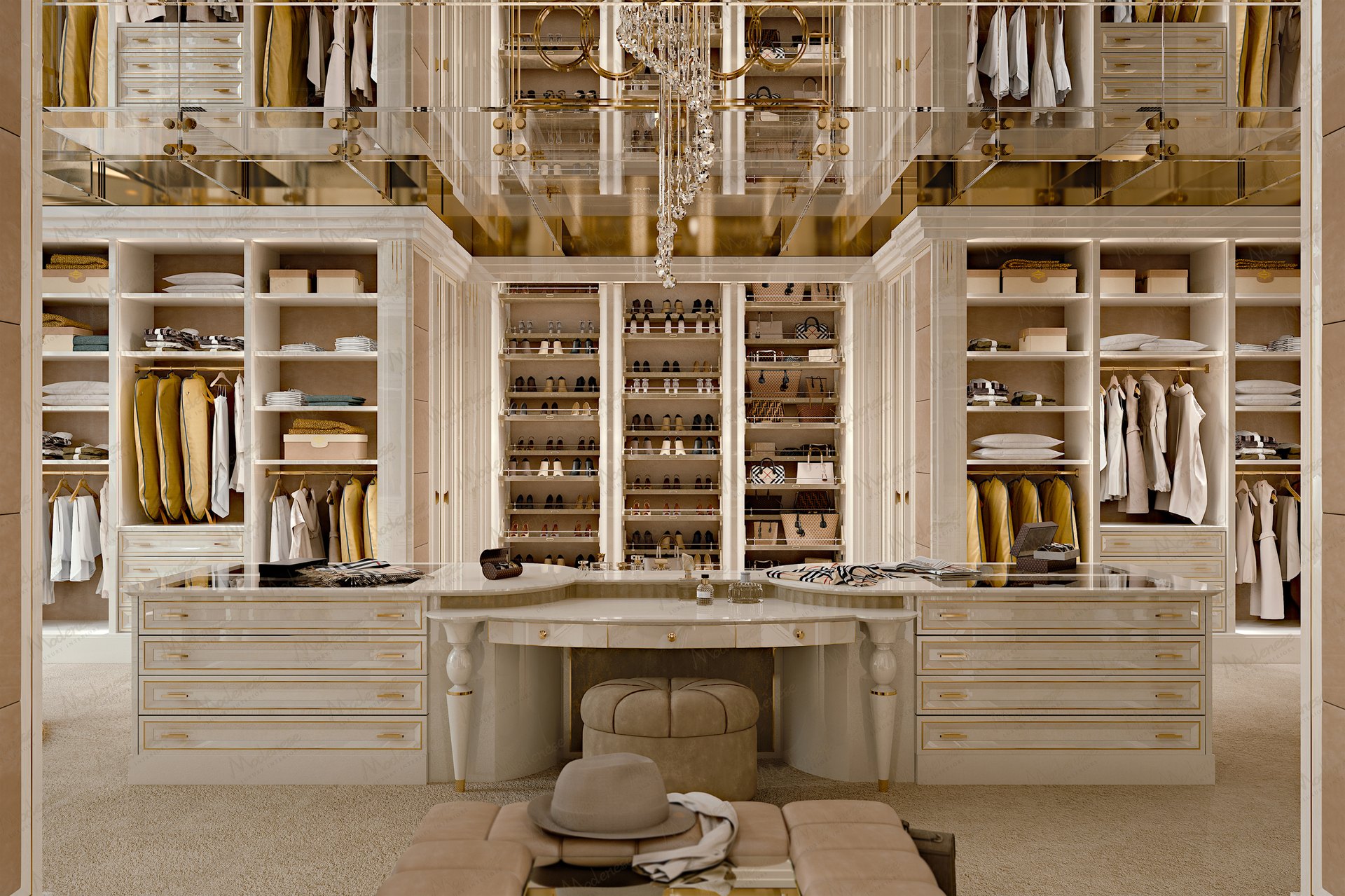
How Lighting Supports Function and Atmosphere in a Walk-In Closet
Lighting shapes both function and perception in a luxury walk-in closet. Plan it alongside materials, drawer hardware, shelf spacing, daylight, and the room’s general lighting. It supports those decisions and does not stand in for them.
This guide covers LED integration in bespoke wardrobe interiors: strip selection, color temperature trade-offs, sensor logic, dimming infrastructure, and thermal management inside enclosed cabinetry.
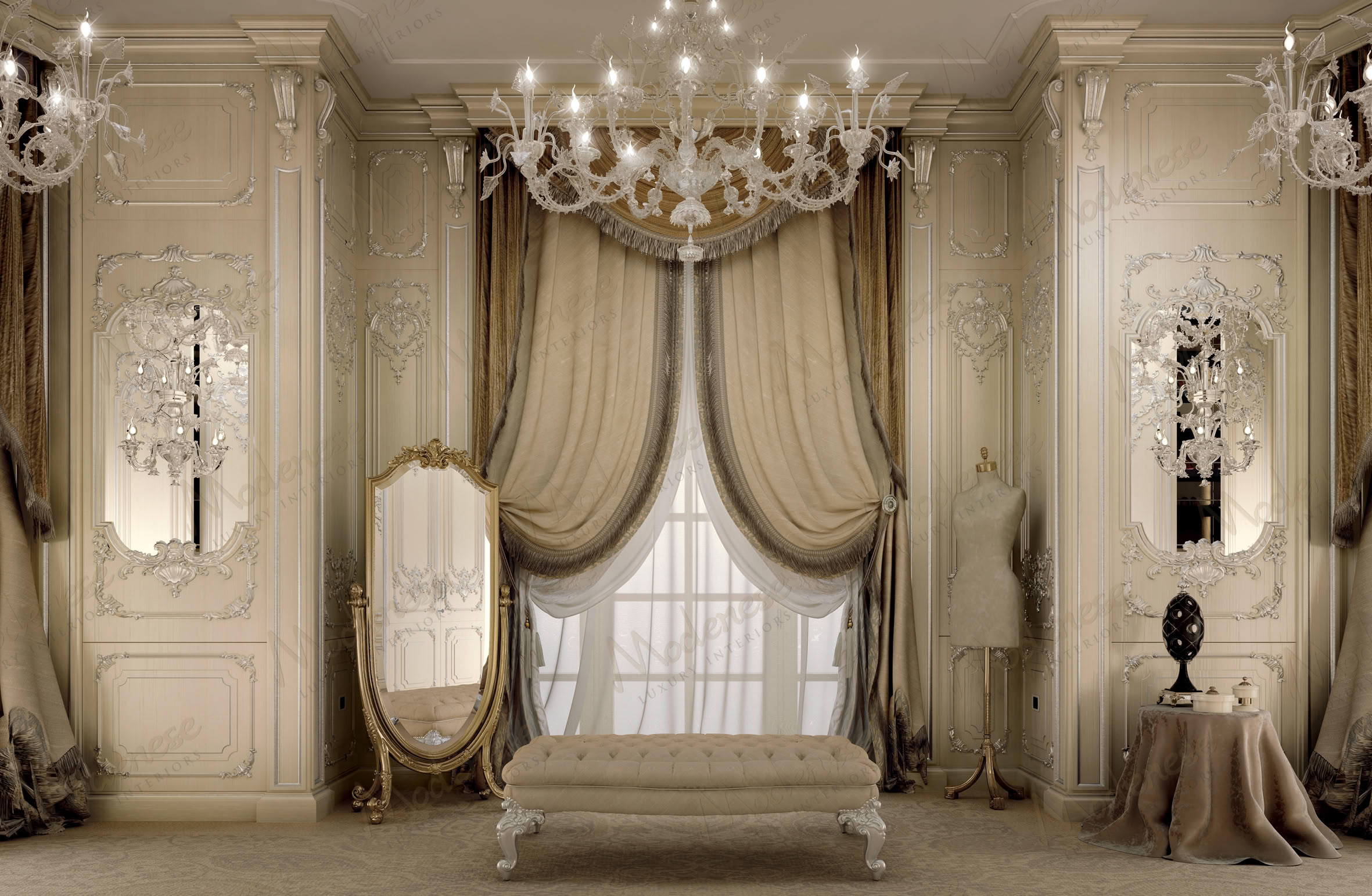
LED Strip Selection: Output and Color Quality
Required light output depends on room geometry, surface reflectance, shelf depth, garment density, mounting position, optics, diffuser losses, and the contribution from general lighting. Work from current luminaire photometric data and a lighting calculation for the project, then confirm shadowing, glare, uniformity, and visibility on a representative mock-up. A lumens-per-meter figure alone does not specify a closet.
Color Rendering Index is one input, and by itself it does not settle color quality or show that one product outperforms another. The current IES TM-30 and CIE guidance supports reviewing fidelity, gamut, and hue-specific shifts alongside the product’s full test report. Before approval, compare candidate sources against your wood, lacquer, leather, metal, and garments under controlled conditions.
Color Temperature and Material Appearance
Choose color temperature with the complete palette and the intended use in mind. Warm wood in a neoclassic closet and pale finishes in a contemporary closet can respond differently to the same source. Each room calls for its own setting. Review physical samples under the candidate sources, and account for daylight and adjacent room lighting.
Tunable-white systems can provide more than one commissioned scene, but they add drivers, channels, controls, commissioning, and compatibility requirements. For the system you are considering, confirm the supported range, color consistency, dimming behavior, flicker performance, controls, warranty, and current project cost. Each scene still needs its own approval, however flexible the system.
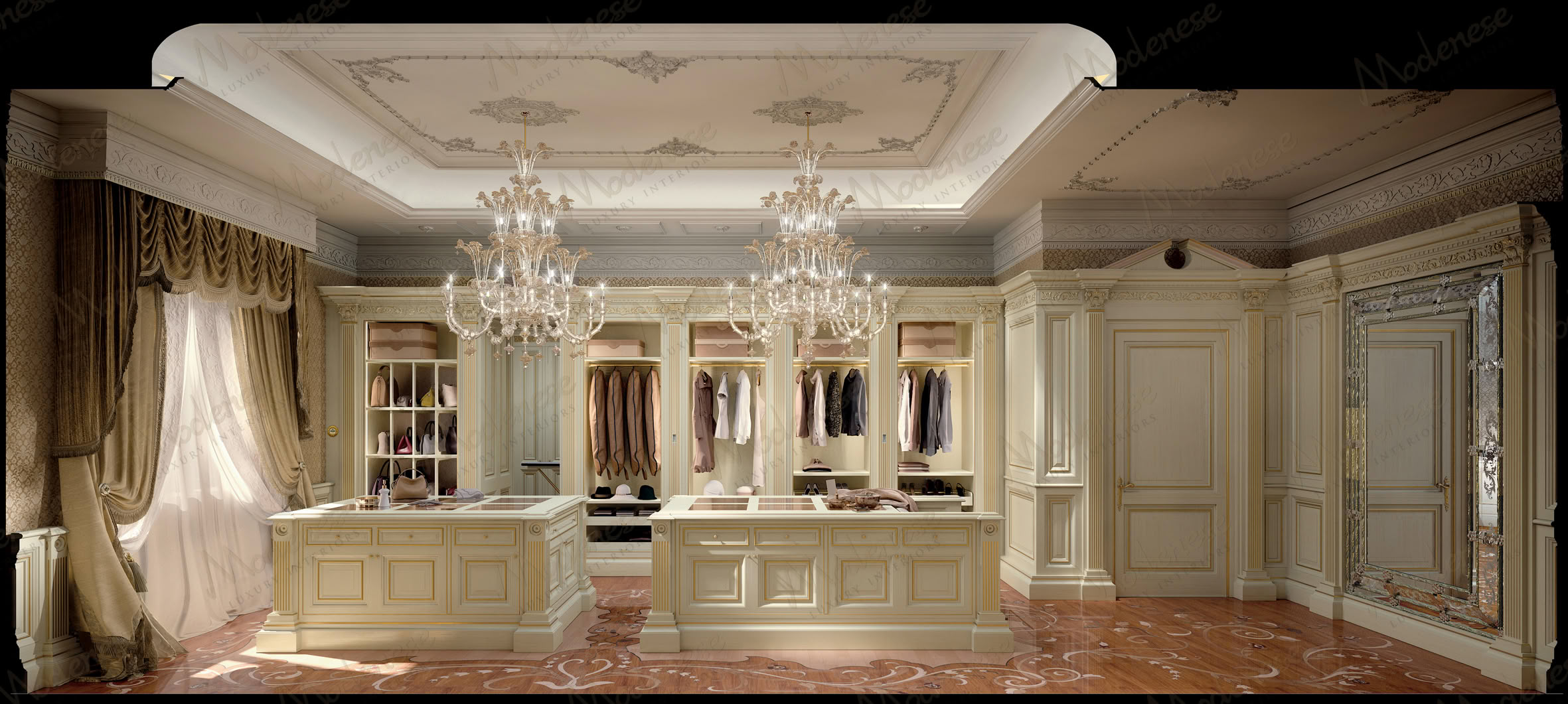
Placement Zones: Where Light Goes and Why
Cove Lighting (Ceiling Perimeter)
Cove lighting can wash the upper cabinetry and add ambient illumination. Set the setback, channel, optic, diffuser, output, and shielding from a photometric study and mock-up that use the ceiling and finish reflectance. Then check sight lines from normal standing and seated positions, access for maintenance, heat dissipation, and any local requirements for circulation lighting.
Shelf-Edge Strips
Shelf-edge lighting should illuminate the useful shelf area without exposing bright points or creating glare on glossy surfaces. Evaluate front, rear, or angled positions against the intended shelf depth and contents. Select the profile, diffuser, optic, setback, and angle from product data and a mock-up.
Hanging Rod Illumination
Hanging-zone lighting can sit above the rod or be integrated into a purpose-designed rail. Compare illumination on the garment faces, glare at eye level, rod load capacity, cable routing, replaceability, and thermal limits. Check the product dimensions and structural rating, since a larger rail does not automatically provide adequate heat management or support.
Drawer Interior Lighting
A compact source with a door or position trigger can light a drawer. The arrangement has to fit the drawer travel, cable bend radius, moving clearances, switch rating, driver, and access for replacement. Test the complete drawer through its full movement, and protect the wiring from abrasion, snagging, and stored objects.
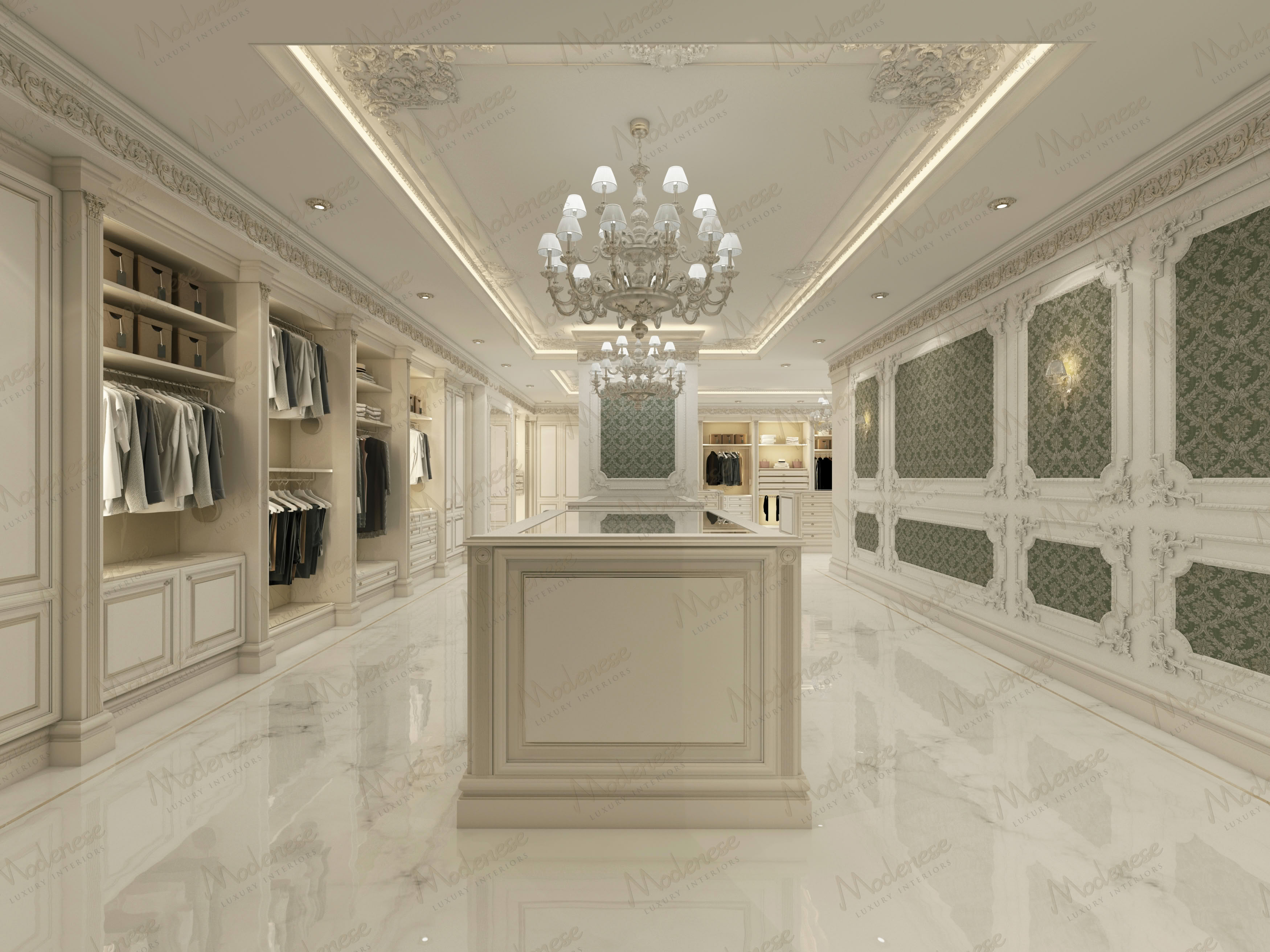
Sensor Logic and Switching
PIR sensors can turn on the lights at room entry when their documented detection pattern covers the approach and ignores movement in adjacent spaces. Determine location, orientation, hold time, daylight response, and manual override in a site test that includes periods when the user remains relatively still.
Capacitive and other proximity sensors can activate individual zones. Sensing distance, substrate compatibility, standby power, false-trigger behavior, and calibration vary by product and installation. Test the sensor behind the proposed panel and finish before any production parts are machined.
Door-activated reed, optical, or mechanical switches can suit enclosed compartments such as a baroque silver closet. Judge reliability from the door geometry, switching load, alignment tolerance, operating sound, and service access, using the manufacturer’s published cycle data for the trigger you select.
Dimming Infrastructure
Closet lighting can use analog, digital-addressable, phase, or wireless control, depending on the driver and the project infrastructure. Whichever you choose, confirm dimming range, flicker, standby behavior, grouping, scene control, emergency or manual override, cable segregation, cybersecurity where applicable, and local electrical requirements.
Analog control can give a straightforward wired interface when compatible drivers and grouping fit the design. Obtain the wiring diagram and dimming curve from the driver manufacturer. Have the electrical designer confirm conductor routing, protection, and control compatibility.
DALI is a standardized addressable lighting-control family. Device capacity, topology, features, certification, commissioning tools, and interoperability depend on the relevant IEC 62386 parts and the DALI or DALI-2 products. Use current DALI Alliance information and certified-product data to count devices and estimate cost for the products chosen. Similar principles apply to coordinated home cinema lighting, subject to that project’s requirements.
Wireless control can reduce new control cabling in some retrofits, including a finished traditional classic closet. Before choosing a system, verify radio coverage, latency under realistic network load, local operation during internet loss, security, update policy, battery or standby requirements, gateway access, and long-term support.
Thermal Management in Enclosed Cabinetry
LED systems still convert part of their input power to heat, and enclosed cabinetry can raise the temperature around strips and drivers. Thermal performance and lifetime depend on power, profile, mounting surface, enclosure volume, ventilation, ambient conditions, duty cycle, driver, and manufacturer test method. A rated lifetime is a test result, not a promise of installed life.
Profiles provide mounting, optical control, and a thermal path, but their dimensions alone do not prove adequate heat dissipation. Use the strip and profile manufacturer’s compatible combinations, maximum temperature limits, mounting instructions, and driver-derating data. Verify accessible temperatures and component temperature at the expected operating condition.
Glass-fronted sections in deluxe modern closets may need ventilation or a lower installed power. Size any openings from a thermal assessment and a mock-up, weighing dust, light spill, acoustic effects, fire behavior, and the visual design.
Heat exposure affects finish durability and hardware lifespan, so the thermal points above bear on material selection for long-lasting walk-in closets. Wiring for closet lighting belongs with the electrical planning covered in modular vs fixed wardrobe construction, where cable routing differs between the two approaches.
When the closet sits in a larger residence that includes a handmade Italian kitchen, coordinate lighting controls across spaces only after confirming capacity, zoning, interfaces, fault containment, cybersecurity, service access, and the owner’s preferred controls. A shared system can simplify operation, but it also adds integration and support dependencies.
See how lighting fits into a complete bespoke walk-in closet design, alongside storage zoning, materials, construction, and project examples.
We publish detailed guides on Italian kitchen engineering, walk-in closet construction, and home cinema design, covering materials, joinery techniques, and the technical decisions behind handmade interiors.