
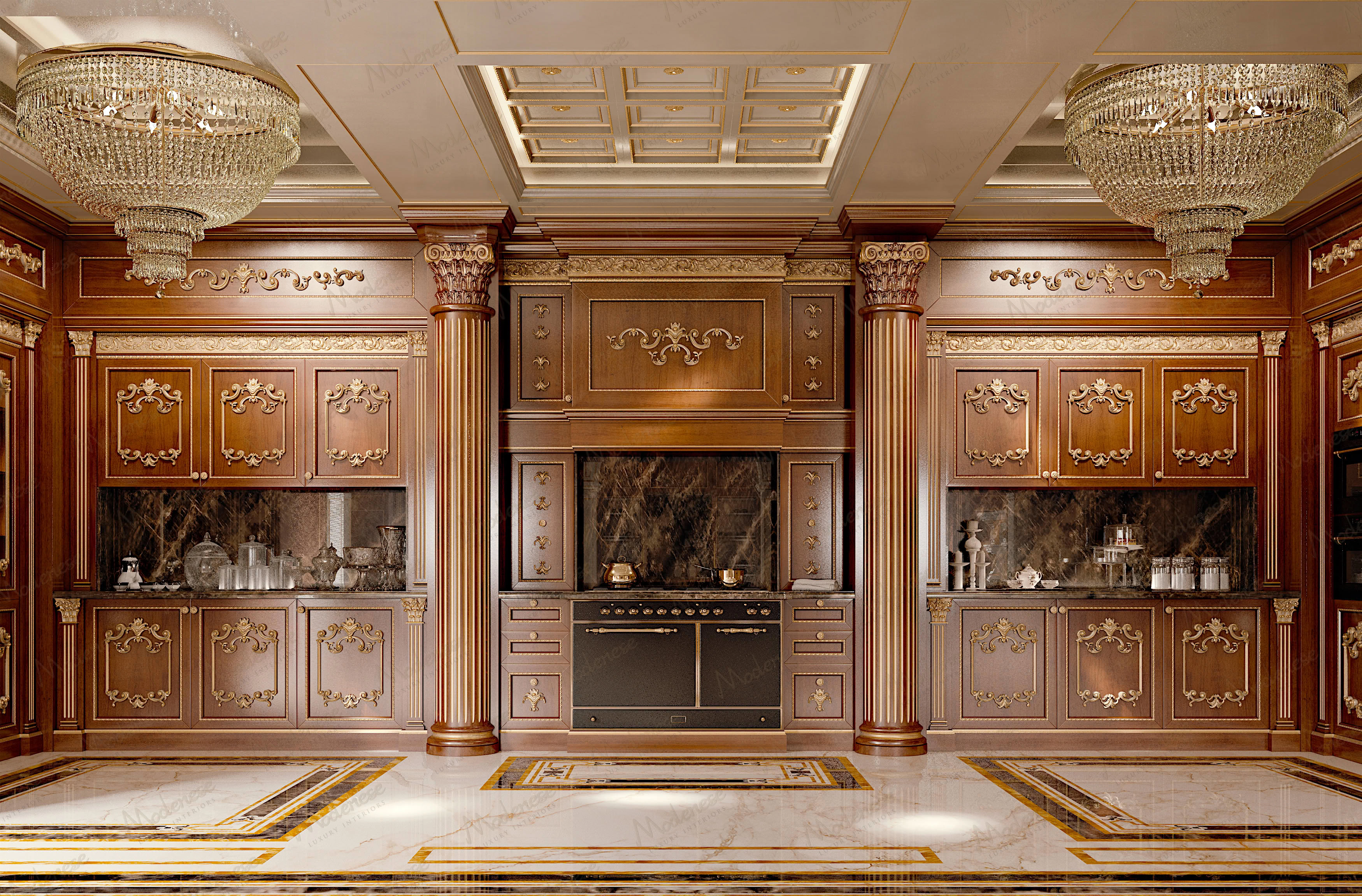
Royal Kitchen


Experience Timeless Elegance with the Royal Kitchen: Italian Craftsmanship Meets Colonial Grandeur
Updated:
Seasoned Italian artisans shape every curve, joint and finish of the Royal kitchen. Its design looks back to the colonial era and does not follow passing trends, while its functionality is thoroughly modern. To see why it looks the way it does, start with royal kitchens of the past.
Royal Kitchens: Historical Background
Royal kitchens were long the working center of palaces, fortresses and grand estates, and they stood behind feasts for nobility and commoners alike. These were large, carefully organized operations, and good cooking depended on good logistics.
The kitchens of Hampton Court Palace, built for King Henry VIII in the 16th century, show the scale involved. They had roasting ranges with spits large enough to turn whole oxen, a pastry house and a boiling house for soups and stews. A large staff worked there through the busiest festivities. Ingenious engineering supported them: high chimneys drew smoke away from the workspace, and early plumbing supplied fresh water, a rarity at the time.
Across the Channel, the kitchens of the Palace of Versailles under Louis XIV were just as impressive. They stood in the Grand Commun, a building separate from the main palace, and were designed to feed the court at a single banquet. The layout separated meat roasting, sauce making and pastry into distinct zones, each overseen by a master chef whose expertise was prized like a general’s on the battlefield. Ingredients came from royal estates, with game from the king’s hunts and rare spices shipped from distant colonies.
Here is a table that compares historical royal kitchens with their modern counterparts, to show how the type has evolved:
The table shows how royal kitchens adapted to new technology while keeping their purpose: to produce a memorable meal in an impressive setting. They once depended on scale and manpower. Today they add efficiency to inherited tradition.
In the 21st century, royal kitchens are no longer confined to palaces. Homeowners, professional chefs and design enthusiasts all draw on the idea, pairing the ceremony of historical kitchens with the precision of modern engineering. The result is a room that is as practical as it is striking.
Here are five essential elements that define a modern royal kitchen, each steeped in detail and purpose:
These elements turn an ordinary kitchen into a royal one, where the details reward a second look and routine tasks take on a sense of occasion.
A royal kitchen takes many trades: stonemasons, metalsmiths and digital engineers all contribute. Take a custom range hood. A blacksmith forges the frame from stainless steel, a glassblower adds curved panels, and an electrician wires in silent fans and mood lighting, all made to the dimensions and style of the kitchen.
In the past, royal kitchens relied on local talent. At Windsor Castle, artisans in nearby villages hammered the copper pots, and the oak tables came from royal forests. The same tradition now reaches further afield. A modern royal kitchen might combine a chandelier from Austria, marble quarried in Tuscany and a spice rack carved by a Japanese woodworker, all shipped and assembled with care.
People shape the result. Designers sketch layouts around the owner’s cooking habits, such as how often they bake or host dinners. A chef may consult on appliance placement so that the workflow follows a professional brigade. Acoustics matter too: sound-dampening panels hidden in the ceiling stop clatter from echoing off stone walls and keep the room calm.
Every sense has a part to play in a royal kitchen. In one such kitchen, butter sizzles in a cast-iron pan, and the scent of rosemary rises from a built-in herb garden. The cool touch of a marble counter contrasts with the warmth of a wood-fired pizza oven in the corner. Soft classical music plays from concealed speakers, and the clink of crystal stemware signals a toast about to begin.
The sensory richness is intentional. In historical royal kitchens, the preparation of food was itself a spectacle, and courtiers might tour the kitchens during a feast to watch the work. That sense of theater survives in open-plan kitchens, where guests sit at the island with a glass of wine while the host plates a truffle-infused risotto.
The royal kitchen is an ideal that has lasted for centuries. You can take inspiration from the roaring hearths of Hampton Court or from the clean lines of a modern estate, and bring it into your own home. Start with a single statement piece, such as a vintage chandelier, a slab of rare stone or a high-end appliance, and build outward with details that suit you.
A royal kitchen is about craft and character as much as wealth. It is the room where family meals happen, and the workmanship is on show every day. If you want one of your own, contact Modenese Bespoke to start the conversation.
Royal Kitchen Design with Ceremonial Scale
Hierarchy, symmetry and decorative emphasis give a Royal kitchen its strong formal presence. Practical planning still decides the result: work areas, storage, circulation and appliances sit comfortably within the larger scheme.
Gilded and patinated finishes in the bespoke Italian kitchen collection reinforce the formal cabinet language of this style. Other kitchens in the portfolio give different expressions, and the Traditional Chic direction offers a more restrained version. In a palace-scale interior, grandeur is convincing when it grows from the architecture around it.
Carved details, framed elevations and rich finishes are organized around a working plan. The room is ceremonial and still works as a kitchen. Turn to the Italian kitchen design service and completed luxury kitchen projects for other interpretations of classical scale and bespoke cabinetmaking.