Modular vs Fixed Construction in High-End Wardrobe Systems

Two Fundamentally Different Engineering Approaches to Walk-In Closet Construction
Every luxury walk-in closet is built using one of two structural methods: fixed cabinetry fastened permanently to the walls and floor, or modular panel-based systems assembled from discrete components that connect to each other and bear load independently of the walls. Each method has specific structural advantages, and the choice between them depends on the building envelope, the client’s timeline for the property, and the level of future reconfigurability required.
This is an engineering comparison — load paths, connection hardware, tolerance management, and the conditions that make each approach the correct one.
Fixed Cabinetry: How It Works Structurally
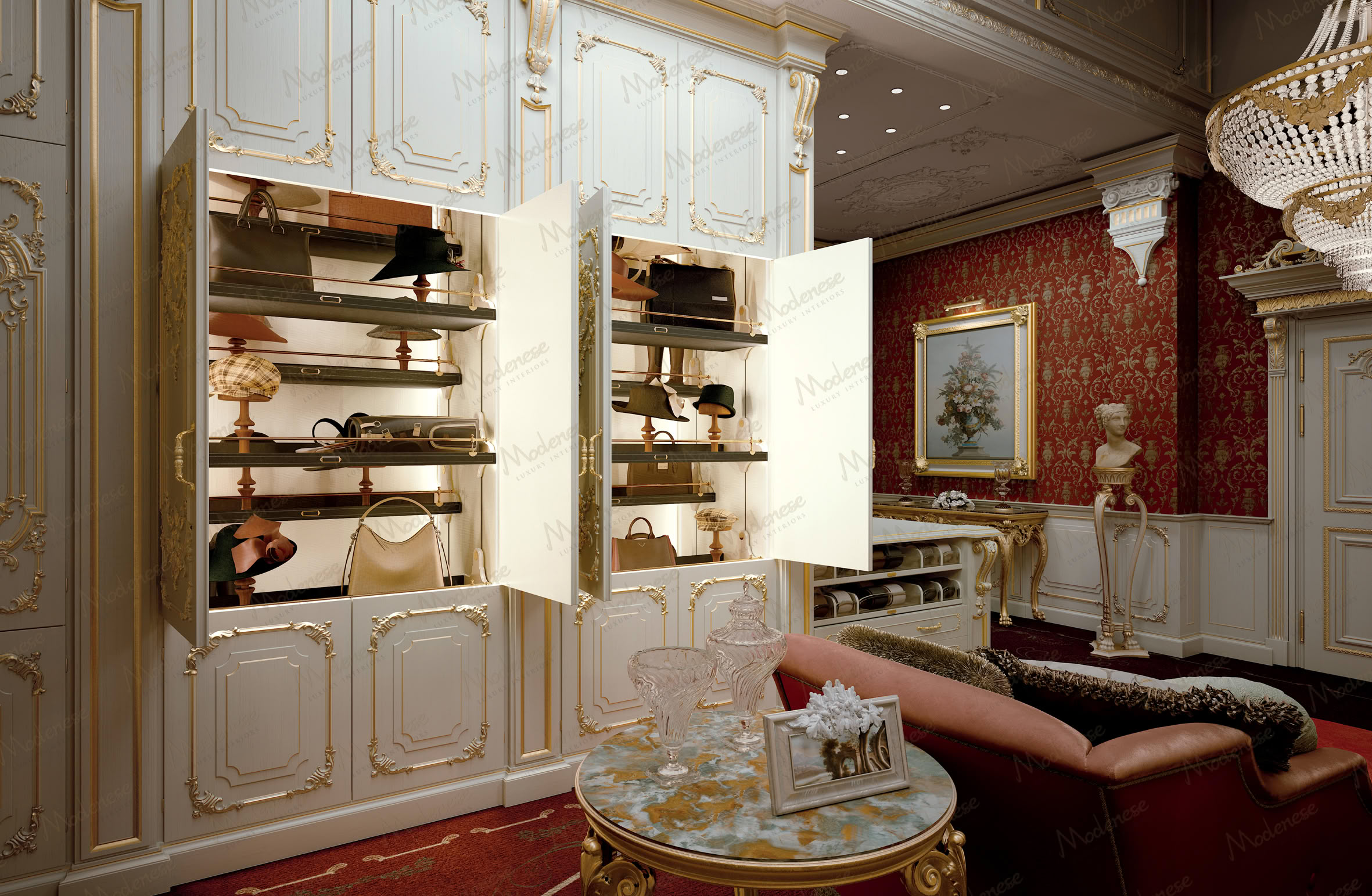
Fixed construction treats the closet as a built-in architectural element. Individual carcases (typically 18mm MDF or plywood) are scribed to the walls, shimmed level, and secured with through-wall fixings into studs or masonry. Adjacent carcases are bolted together with connector bolts at 400mm intervals along shared vertical edges, creating a continuous rigid structure.
The walls bear a significant portion of the vertical load, especially for floor-to-ceiling units (2400-2700mm). A single vertical carcase panel 2600mm tall, 600mm deep, made from 18mm MR-MDF, deflects measurably under its own weight plus shelf loads if it relies solely on the base for support. Wall-mounting distributes this load into the building structure, allowing thinner panels and longer unsupported vertical spans.
When Fixed Construction Is the Only Viable Option
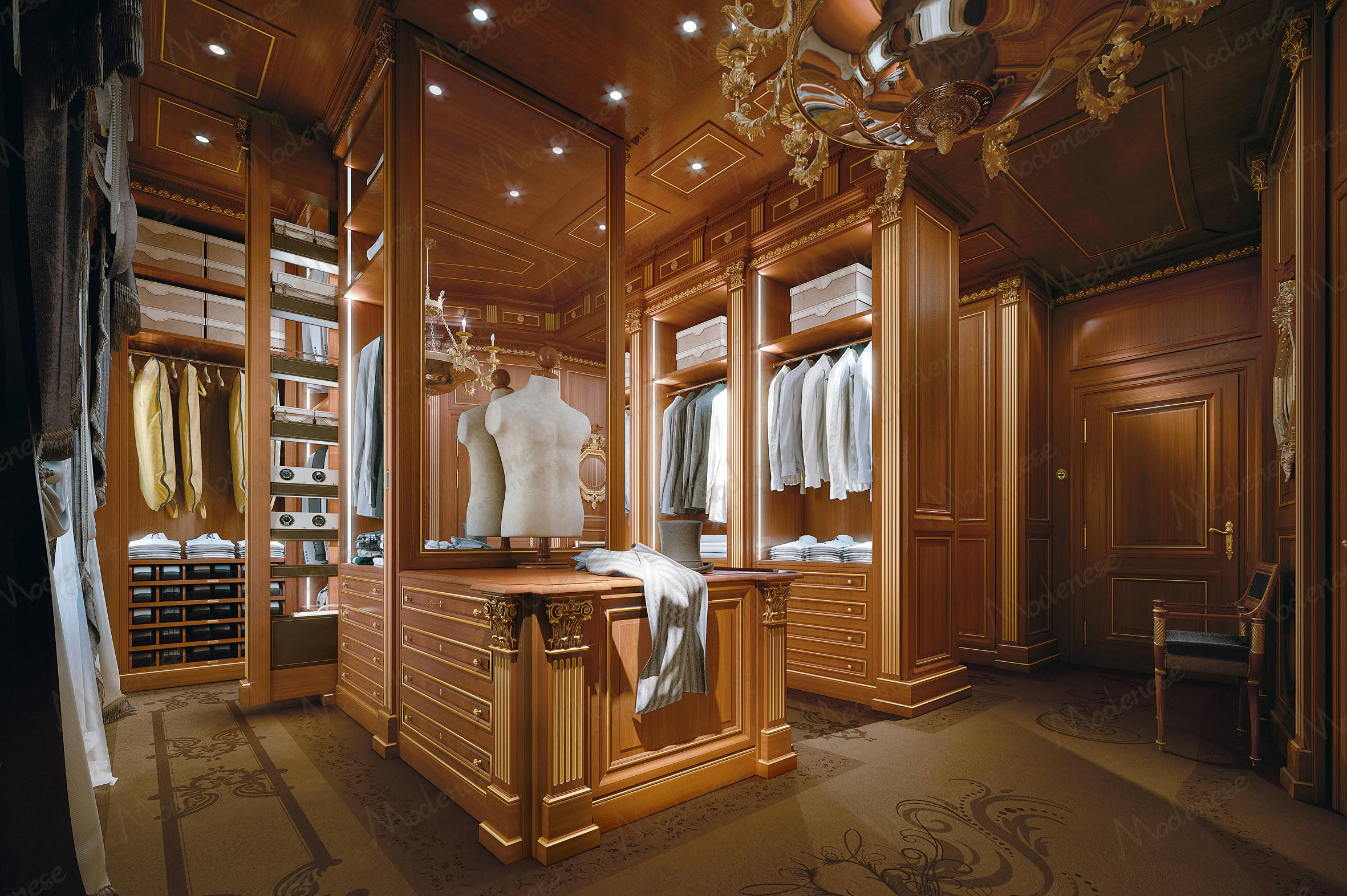
Stone or solid masonry walls that accept mechanical fixings directly provide an ideal substrate for fixed cabinetry. A traditional classic closet installed in a villa with 300mm solid brick walls can transfer substantial loads directly into the masonry via expanding anchors. The cabinetry becomes part of the building.
Integrated architectural elements — crown mouldings that transition from wall plaster to cabinet cornice, paneling that wraps from room wall onto closet face frames, built-in stone or marble surfaces — require fixed construction. These elements cannot accommodate the 2-3mm gaps that modular systems leave at wall junctions for tolerance. The baroque silver collection, with its integrated carved cornices and wall-mounted decorative panels, is engineered exclusively as fixed cabinetry for this reason.
Rooms with significantly irregular geometry — sloped ceilings, out-of-plumb walls exceeding 10mm over 2400mm, uneven floors — are actually easier to handle with fixed construction. Each carcase is scribed individually to the actual room dimensions, with fillers and scribing strips covering the gaps. Modular systems assume flat, level surfaces and struggle with irregularities beyond their adjustment range.
Modular Panel Systems: How They Work Structurally
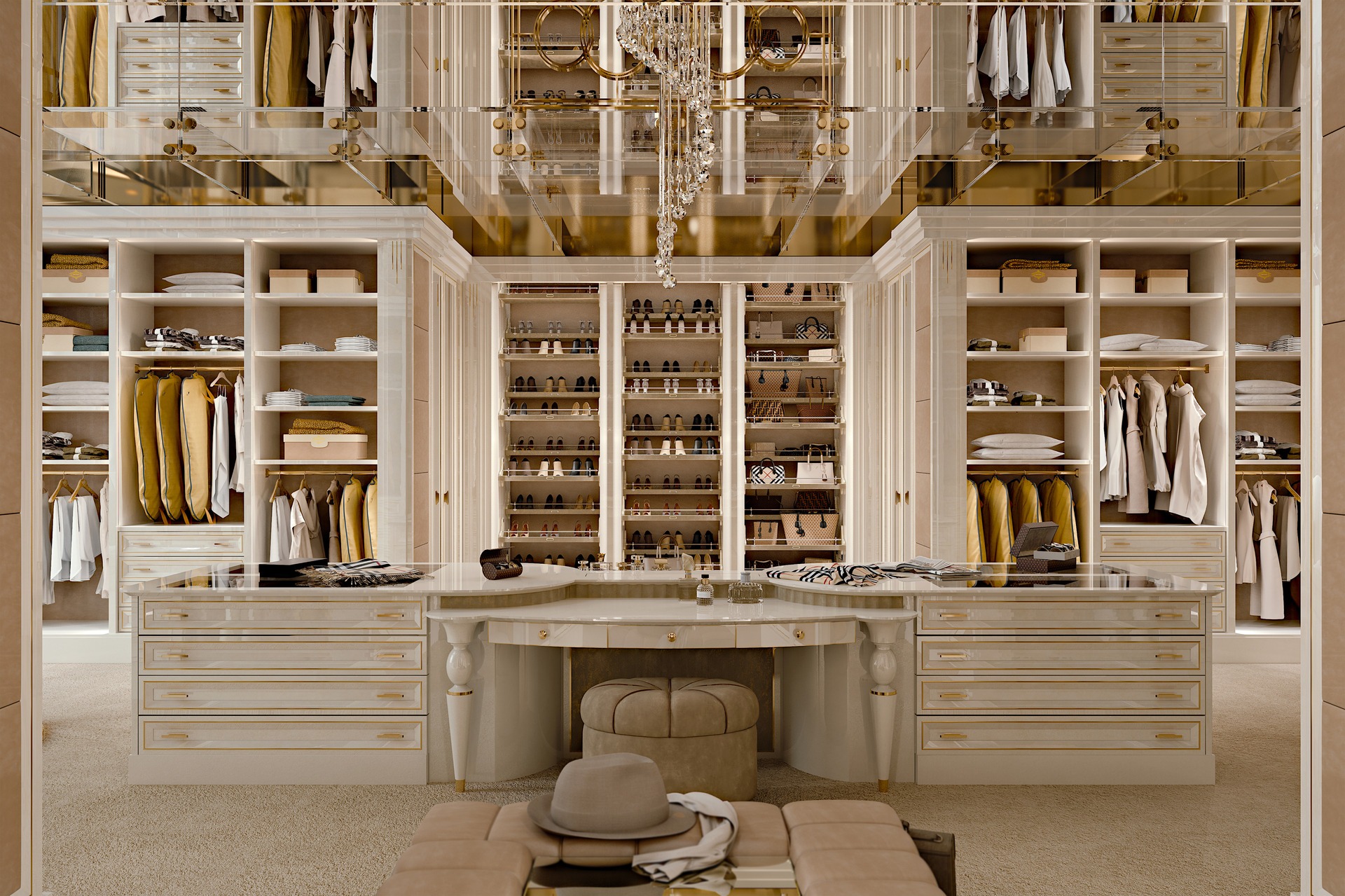
Modular closet systems are freestanding structures assembled from standardized panels connected with mechanical fasteners. The panels bear load through panel-to-panel connections and transfer weight directly to the floor, independent of the walls. Wall fixings, if used, serve only as anti-tip restraints — they prevent the tall structure from tipping forward, but do not carry vertical load.
The structural principle is a post-and-beam grid: vertical panels act as posts, horizontal shelves and rails act as beams connecting them. Each panel junction is a structural node. The system’s rigidity comes from the number and quality of these connections.
Connection Hardware Comparison
Cam locks (minifix) are the most common modular connector. A 15mm zinc cam housed in one panel engages a steel dowel screwed into the adjacent panel. Tensile strength: approximately 150-200N per cam. Two cams per joint (standard practice) provide adequate holding force for most shelf and side panel connections. Cam locks are invisible when assembled — the cam housing is covered by a plastic cap or hidden behind the panel face. They allow disassembly and reassembly 4-6 times before the cam housing bores begin to loosen in particleboard substrates. In MDF or plywood, the number of reassembly cycles is higher (8-10).
Confirmat screws (7mm x 50mm) provide higher joint strength than cam locks — approximately 1000-1200N pullout resistance in 18mm particleboard. The trade-off: they are not designed for repeated disassembly. The screw threads cut directly into the panel material, and each removal weakens the bore. Three reassembly cycles is a practical maximum. Confirmat joints are common in closets that will be assembled once and left in place for years but may eventually need to be moved — a middle ground between truly fixed and fully modular.
Lamello Clamex P-14 is a more sophisticated option. This is a CNC-machined connector that uses a toggle mechanism locked by a rotating disc. Tensile strength: 1500N per connector. It allows unlimited disassembly and reassembly cycles without bore degradation, because the connector body distributes load across a larger panel area than point-fixings like cams or screws. Cost per joint is 3-4x higher than cam locks. Justified in high-end modular systems where reconfigurability is a core design requirement, such as a modern luxury closet designed to adapt as the owner’s wardrobe evolves.
Load-Bearing Calculations for Floor-to-Ceiling Units
A vertical panel 2600mm tall, 600mm deep, 18mm MR-MDF, supporting five shelves loaded at 25kg each (total 125kg vertical load plus panel self-weight of approximately 18kg) must transfer 143kg to the floor through its 18mm bottom edge. The bearing pressure at the floor contact point: 143kg distributed across an 18mm x 600mm footprint = approximately 0.13 MPa. This is well within the compressive capacity of MDF (approximately 8-10 MPa), so the panel itself won’t crush.
The critical failure mode is buckling. An unsupported 18mm MDF panel 2600mm tall has a theoretical buckling load of approximately 280kg under ideal conditions (uniform load, perfectly straight panel, pinned top and bottom). With real-world imperfections, the safe working load drops to roughly 40% of theoretical — around 112kg. This means a heavily loaded floor-to-ceiling unit in a modular system is operating near the structural limit of a single 18mm panel. The solution: horizontal cross-members (shelves, fixed rails) every 400-500mm vertically, which act as bracing and prevent the panel from bowing. Every shelf connection shortens the unbraced length and raises the buckling threshold.
Managing Floor and Ceiling Irregularities
Modular systems rely on adjustable feet (typically M10 threaded levelers with 20-30mm adjustment range) to accommodate floor irregularities. If the floor varies more than 30mm across the footprint of the closet, extended levelers or a separate base frame are required. The base frame — a perimeter of 50mm x 50mm steel angle, leveled independently — provides a flat, level reference plane for the modular panels above.
Ceiling gaps are handled with filler panels or adjustable cornice strips. A transitional closet design that stops 50-80mm below the ceiling uses a planted cornice to close the gap while concealing the variation. If the ceiling drops 20mm from one side of the closet to the other, a tapered cornice — scripted on-site by the installer — disguises this without requiring the cabinets themselves to be non-rectangular.
When to Choose Which System
Fixed construction is correct when: the property is permanently owned, walls are structurally sound and capable of bearing load, architectural integration (mouldings, paneling, stone elements) is required, and room geometry is irregular enough that scribing is needed. The carpentry workshop builds fixed cabinetry as one-off constructions shaped to the specific room.
Modular construction is correct when: the property may be sold or leased within 10-15 years, the closet needs to be reconfigured as the wardrobe changes (a shift from business suits to casualwear changes the ratio of hanging to folded storage), the room has standard geometry (plumb walls, level floor within tolerances), or local building regulations restrict permanent modifications to the structure.
Hybrid approaches work well in specific situations. A fixed structural frame — wall-mounted vertical standards and a fixed base — provides the rigidity and wall integration of fixed construction, while modular shelf and drawer units clip into the standards and can be repositioned. This gives the visual coherence of built-in cabinetry with partial reconfigurability.
The connection hardware choices interact directly with the material selections covered in our materials guide — cam locks perform differently in particleboard versus MDF versus plywood. And the electrical infrastructure for integrated closet lighting routes differently in modular systems (through panel-to-panel conduit channels) versus fixed construction (through wall chases behind the cabinetry).
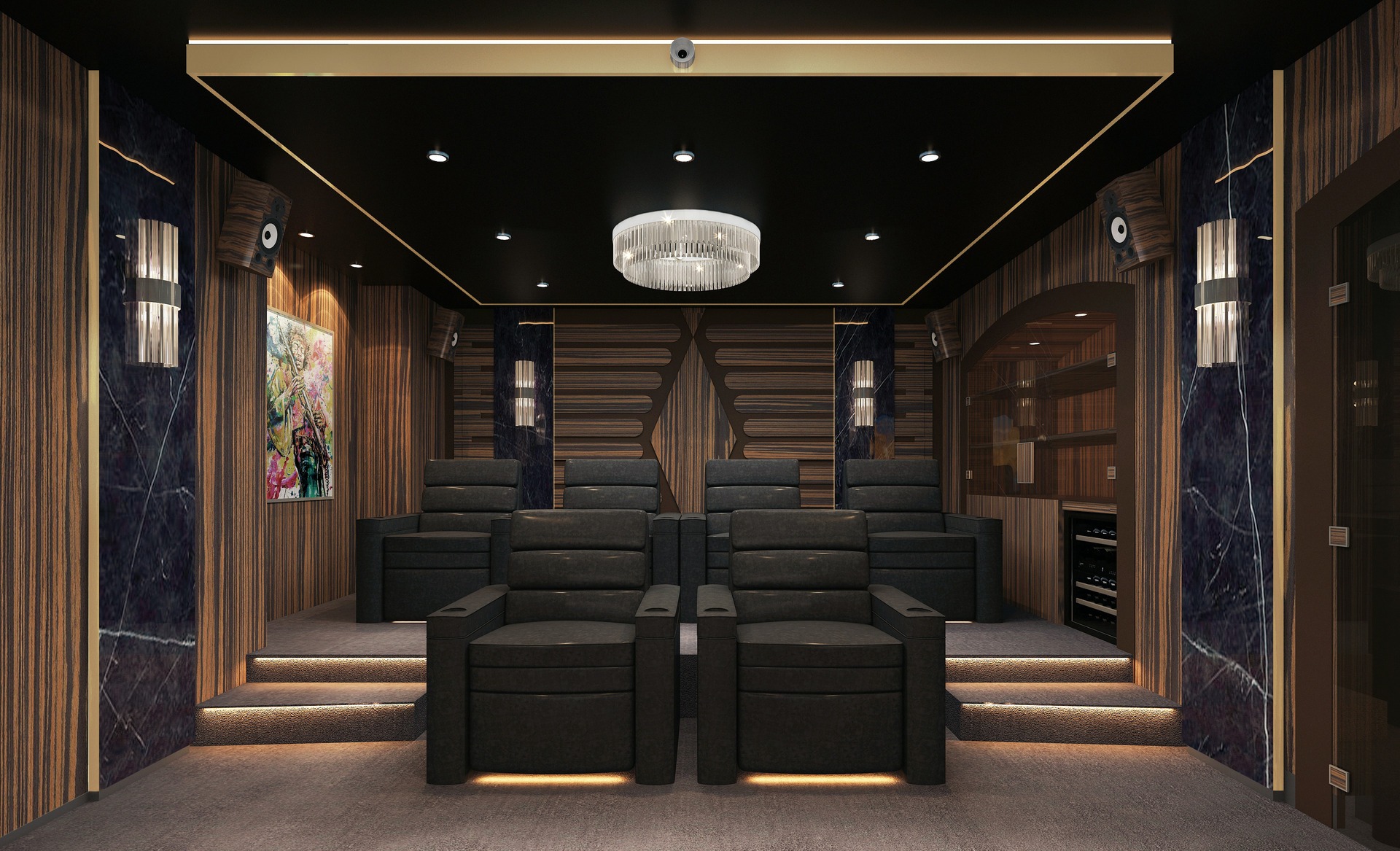
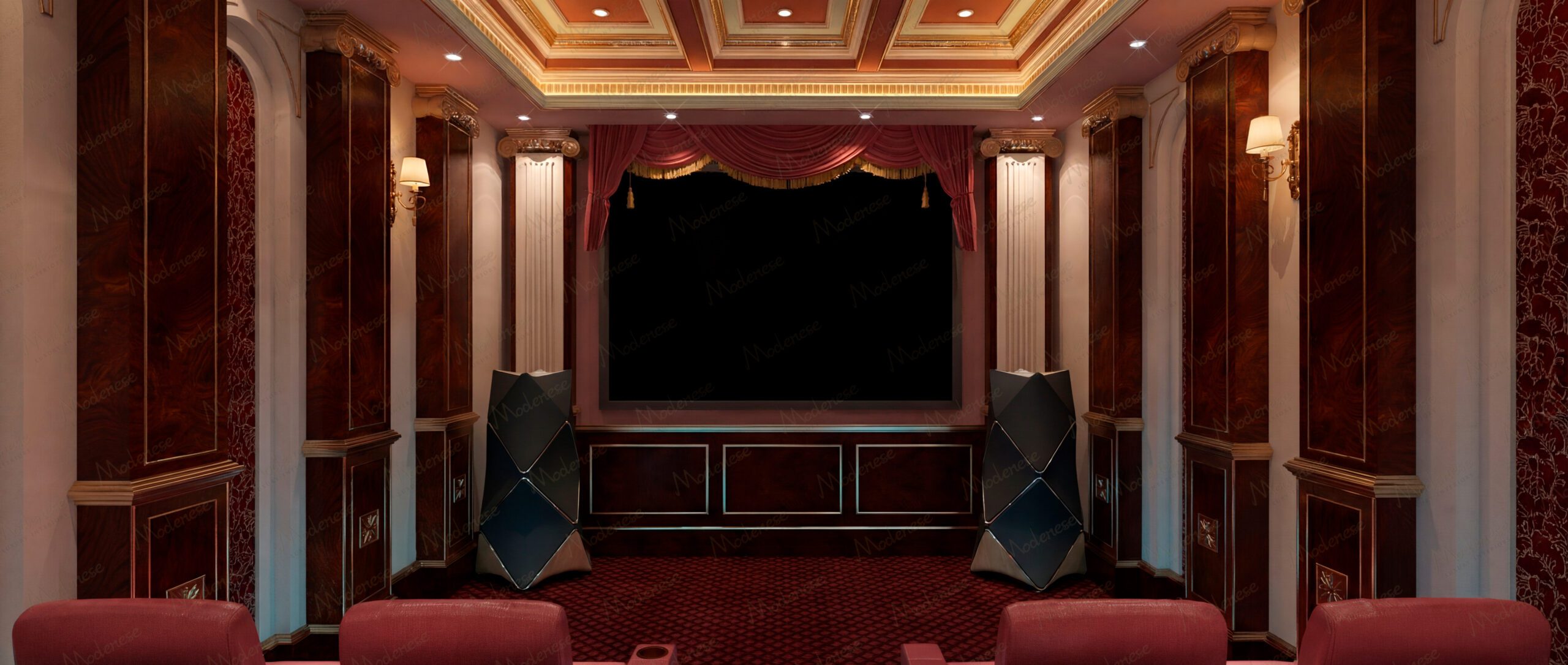
The same fixed-vs-modular decision applies in kitchen design, though kitchens almost always use fixed construction due to plumbing and ventilation requirements. Home cinema installations similarly rely on fixed acoustic panel mounting, though the acoustic panel engineering shares some structural principles with closet wall mounting.